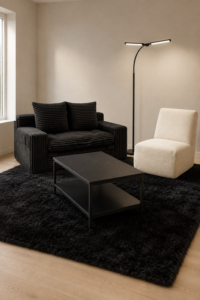

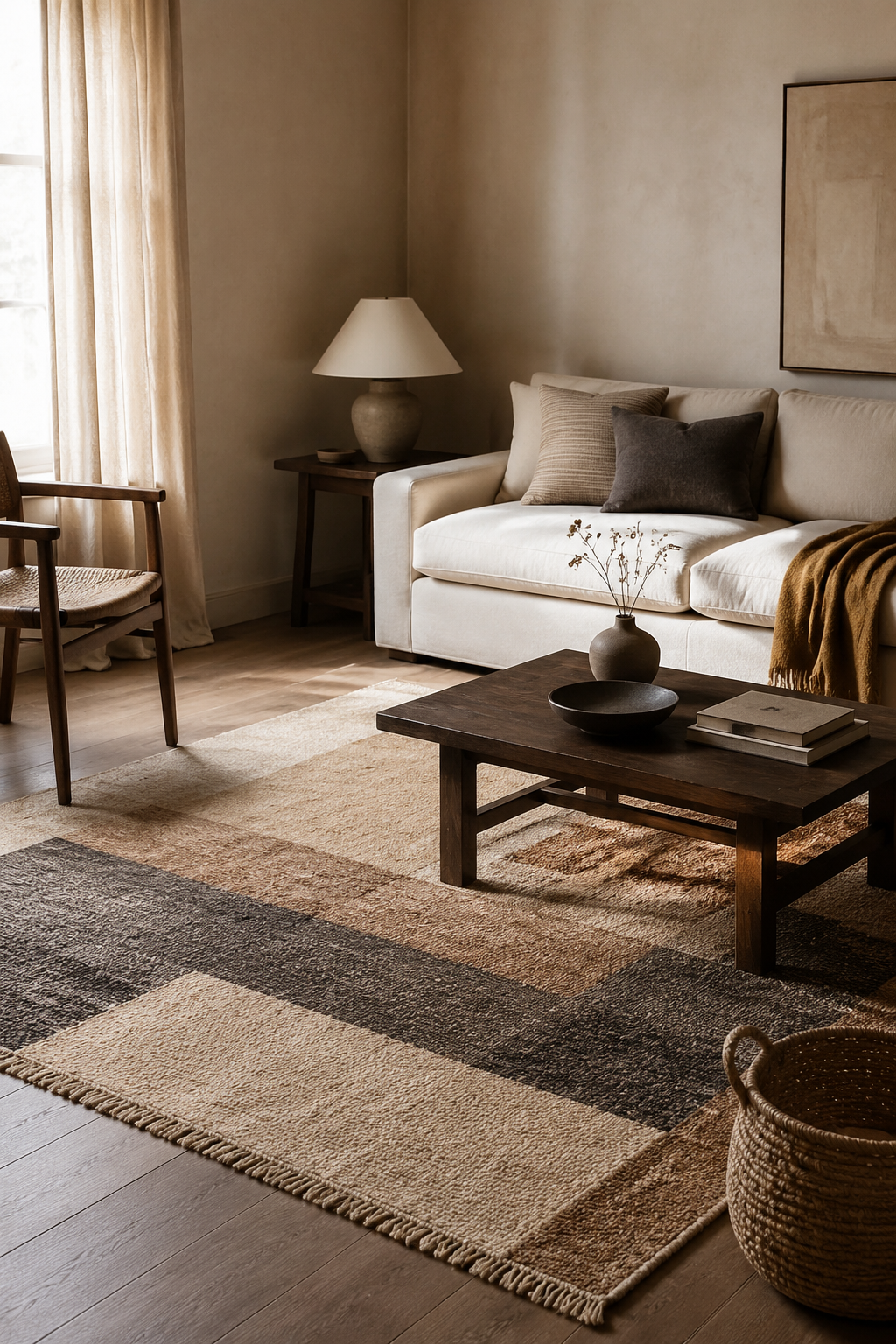
Motif berbere is a search phrase often used for geometric designs associated with the Indigenous Amazigh peoples of North Africa. In decorating, these motifs may appear in handwoven rugs, blankets, cushions, baskets, and contemporary prints. Their strong lines can give a room rhythm and warmth, but combining too many high-contrast patterns can quickly overwhelm the furniture, architecture, and objects that make a home functional.
A considered room begins with context. The broad label Berber has a complex history, while many makers and communities identify as Amazigh. When the origin of an object is known, use the maker’s preferred terminology and preserve details about its region, materials, and technique. When provenance is unknown, describe what can actually be verified—such as a geometric wool rug—rather than assigning a cultural identity. With that foundation, motif-led decor can feel collected, spacious, and respectful instead of themed.
Key takeaways
- Let one patterned textile lead and give it enough visual space.
- Repeat two or three colors instead of repeating every motif.
- Use accurate maker, region, material, and technique information when available.
- Separate bold patterns with plain upholstery, bare wall, or solid textiles.
- Keep walkways, door swings, and useful surfaces clear before adding decor.
- Use removable textiles and framed art for renter-friendly pattern.
In this article
- Understand the motif before styling it
- Give one motif the leading role
- Build a restrained color palette
- Mix patterns by scale, not by quantity
- Balance woven texture with smooth surfaces
- Protect layout and everyday function
- Use motif berbere decor in small or rented rooms
- Edit the room and source additions slowly
1. Understand the motif before styling it
Begin by separating a documented cultural object from a contemporary pattern inspired by geometric forms. A handmade textile may carry information about its maker, community, weaving method, materials, or place of origin. Keep that information with the piece, and avoid reducing it to a generic tribal accent. If a seller provides no reliable provenance, describe the object according to visible and verifiable qualities rather than inventing a story.
This distinction improves the room as well as the language around it. A meaningful textile deserves enough space to be studied, while an unsigned contemporary print can function as a supporting pattern. Treating every zigzag or diamond as interchangeable flattens genuine differences and usually leads to a room filled with disconnected motifs.
Before hanging or placing an older textile, inspect its condition. Strong daylight, damp walls, sharp clips, and heavy foot traffic may damage delicate fibers. A valuable or fragile piece may need professional mounting or a lower-wear location instead of use as an everyday rug.
2. Give one motif the leading role
Choose a single patterned piece as the room’s visual anchor. In a living room, that might be the rug; in a bedroom, a blanket or upholstered bench may lead instead. The anchor should be visible from the main entrance without competing immediately with another equally assertive surface. This hierarchy lets the eye settle before taking in smaller details.
Measure before choosing scale. A rug that is too small can create several disconnected islands, while a wall textile squeezed between furniture loses its presence. In a seating area, aim for a rug large enough to relate clearly to the main furniture grouping. On a wall, leave a border of open space around the textile rather than forcing it into the exact width of the sofa.
Once the anchor is placed, photograph the room in grayscale. If several areas demand equal attention even without color, reduce one pattern or increase the plain space between them. The goal is not minimalism; it is a clear order in which one piece leads and the rest supports it.
3. Build a restrained color palette
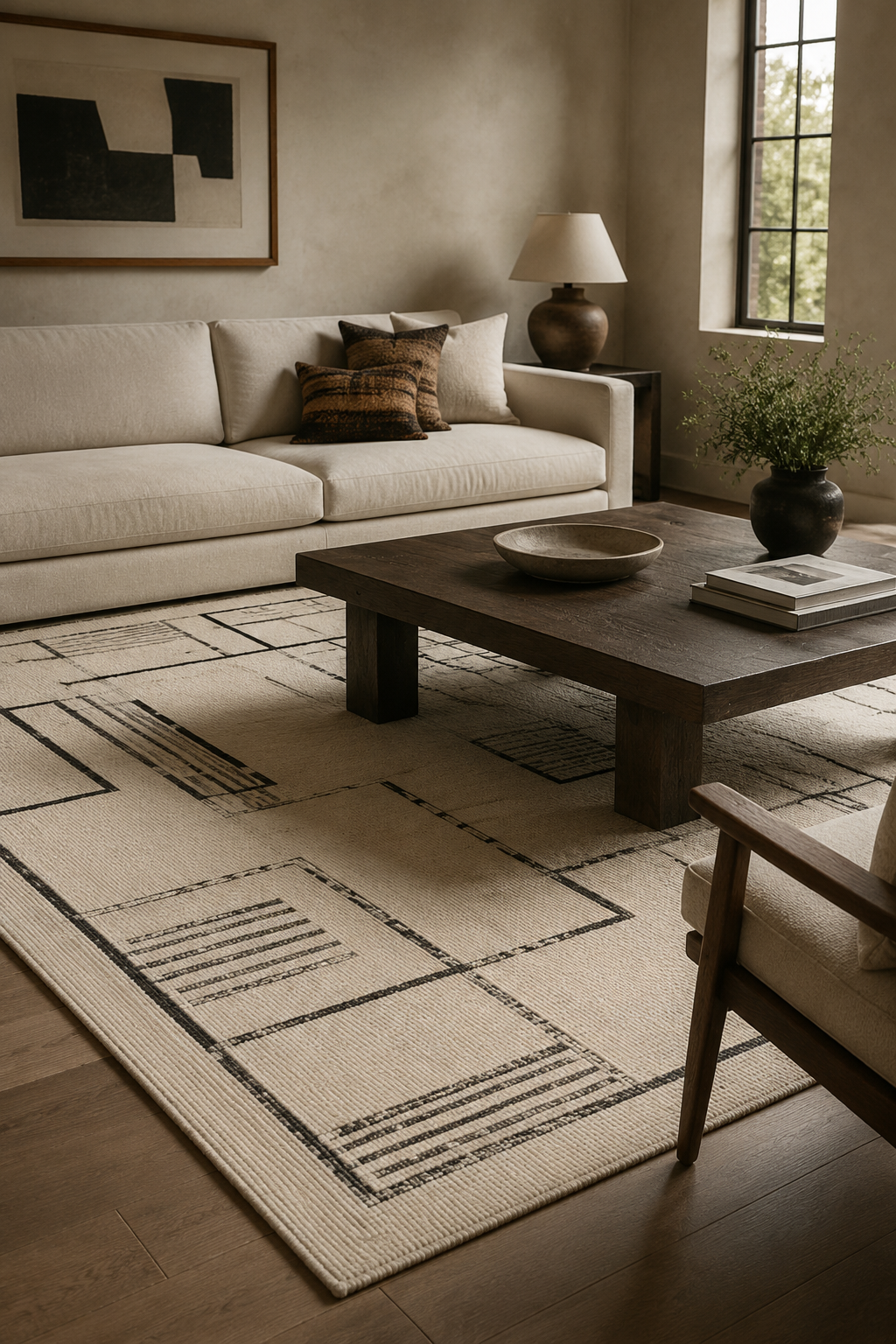
Pull two or three colors from the anchor piece and repeat them selectively. A black-and-cream rug might connect to dark wood and a single charcoal cushion. A textile containing rust, saffron, and brown can sit against warm white walls with one rust-colored throw. Repetition creates continuity without requiring identical patterns.
Let neutrals carry most of the visual weight. Cream, sand, oatmeal, clay, and warm gray provide a quiet field for strong geometry. Test paint and fabric samples in the room because warm neutrals can shift toward yellow, pink, or green as daylight changes. If the space is naturally dark, keep the walls lighter and introduce depth closer to the floor.
High contrast makes a motif appear busier, while lower contrast softens its effect. When the anchor is crisp black and white, keep supporting patterns tonal. If the main textile has faded or earthy colors, one sharper dark line elsewhere can give the composition structure.
4. Mix patterns by scale, not by quantity
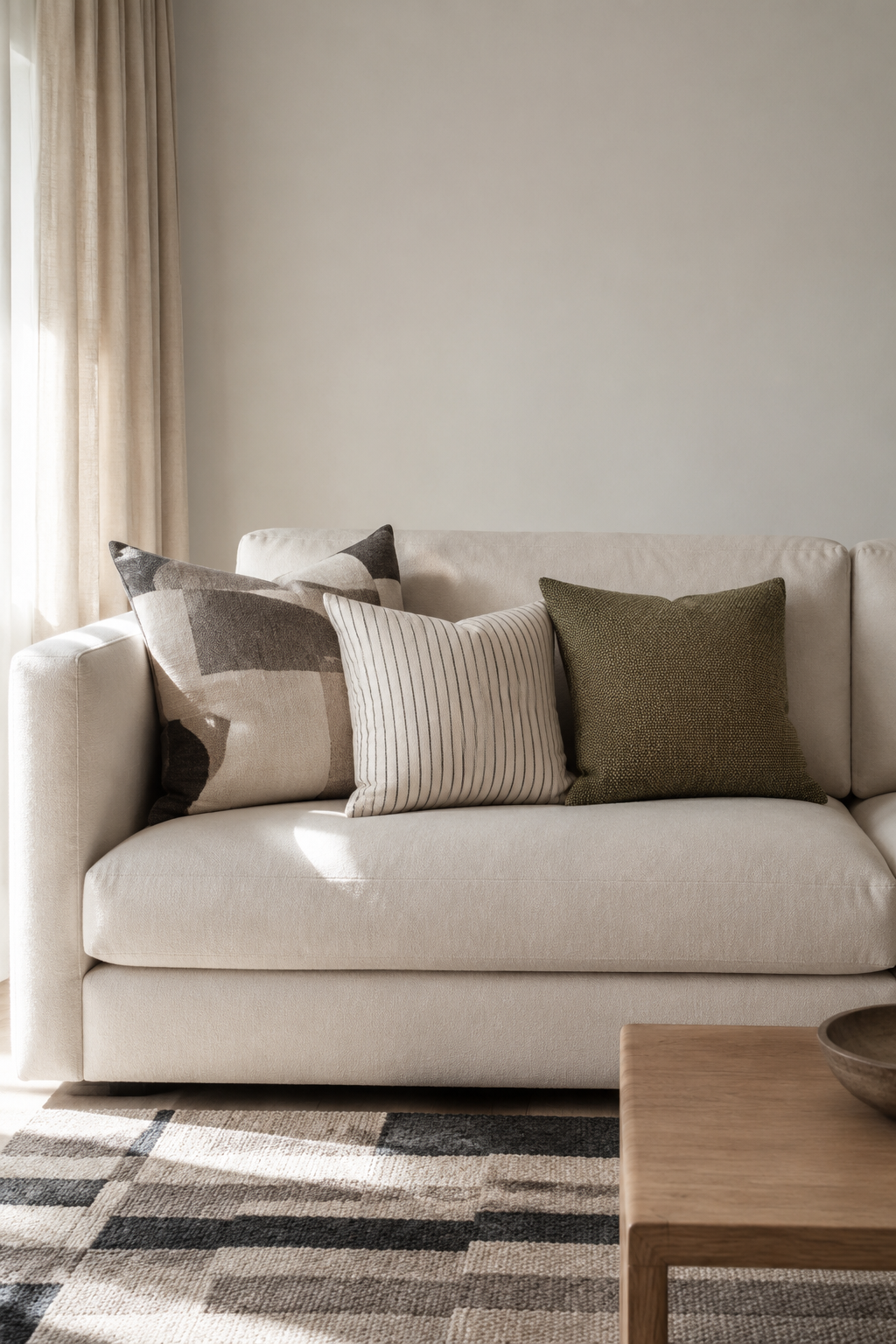
Pattern mixing works when each design has a different visual job. Pair a broad diamond or stepped geometry with a fine stripe, subtle check, or nearly solid weave. Two patterns of similar scale tend to compete even if their colors coordinate. Place the strongest repeat on the largest surface and use smaller patterns in limited, separated doses.
Plain fabric is an active part of the arrangement. A solid sofa, unpatterned curtain, or bare section of wall creates the pause that allows detail to register. If three patterned cushions feel crowded, replace the middle one with a textured solid rather than removing all color. Bouclé, linen, slub cotton, and wool can provide interest without adding another motif.
Avoid buying a complete set of matching motif-covered accessories. Repeating the same design on a rug, cushions, curtains, and baskets makes the room feel themed and can obscure the qualities of the original anchor. Connections through color, material, or line are usually more convincing than exact repetition.
5. Balance woven texture with smooth surfaces
A motif-rich room benefits from materials that do not introduce more visual information. Smooth wood, matte ceramic, plain plaster, leather, and simple metal can balance the irregular texture of woven fibers. A dark wood table can echo a black line in a rug without adding another pattern, while an undecorated ceramic lamp offers shape and light.
Natural-fiber baskets are useful, but several similar woven objects can become another form of repetition. Choose baskets for specific jobs—blankets, toys, laundry, or planters—and vary placement rather than lining them across every surface. Check for rough edges near upholstery and use a liner or saucer when a basket conceals a plant pot.
Contrast texture intentionally. Place a nubby textile near a smoother surface so each reads clearly. If the rug, sofa, cushions, curtains, and lampshade are all heavily textured, the room may feel visually dense even with a quiet palette. Changing one large element to a smoother finish often restores balance.
6. Protect layout and everyday function
Decorating succeeds only when the room remains comfortable to use. Identify the main walking route, door swings, heating vents, and frequently opened storage before placing rugs or baskets. Keep low objects out of narrow paths and use a suitable rug pad to reduce movement. Pattern should define a zone, not disguise a trip hazard.
Scale the motif to viewing distance. A large repeat can read clearly across a room, while a fine design is better appreciated on a cushion, framed textile, or bedside runner. In a small room, one substantial patterned surface often feels calmer than five small accents scattered at different heights.
Preserve useful blank areas. Leave part of the coffee table open, allow a bedside surface to hold daily essentials, and avoid covering every chair with multiple cushions. A room feels collected when objects support life; it feels overcrowded when styling prevents normal routines.
7. Use motif berbere decor in small or rented rooms
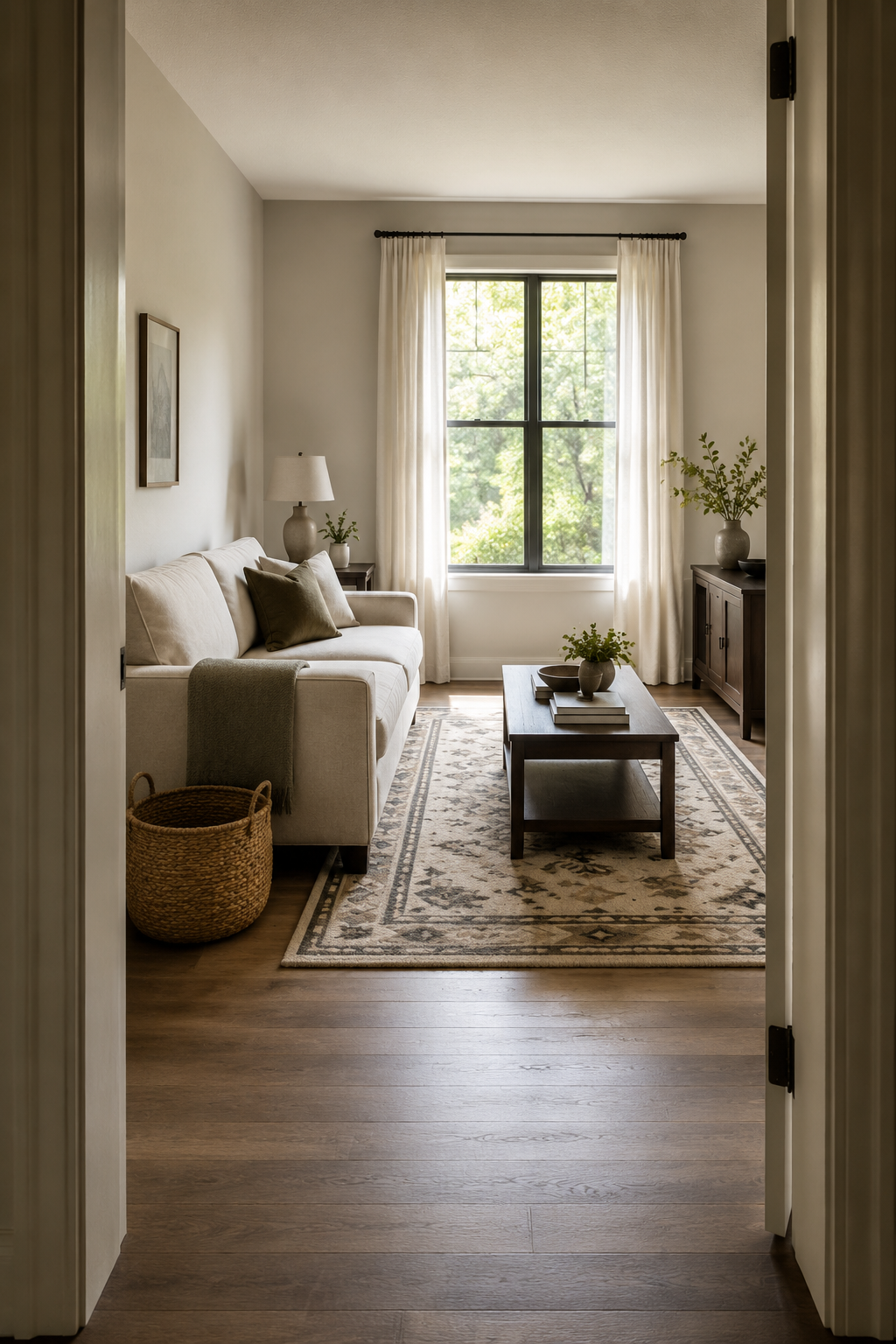
Motif berbere decor does not require permanent changes. A renter can introduce pattern through a rug, removable cushion covers, a throw, or a framed textile placed on a picture ledge. Plug-in lighting and freestanding storage add warmth without altering fixed finishes. Follow lease requirements and test any removable adhesive on a hidden area before widespread use.
In a studio or compact room, restrict the strongest motif to one functional zone. A runner can define an entry, a rug can anchor the seating area, or a blanket can give the bed a focal layer. Repeating a single color outside that zone helps it belong to the larger room without spreading pattern everywhere.
Use vertical space carefully. One appropriately sized framed textile can add more impact than a crowded gallery wall. Keep the display away from cooking moisture, direct heat, and strong sunlight, and choose a hanging method that supports the material without puncturing fragile fibers.
8. Edit the room and source additions slowly
Pause after placing the anchor, palette, and essential furniture. Live with the room for several days before adding more pattern. Daylight, evening lamps, and ordinary household activity reveal whether a textile feels balanced or dominant. Photographing the room from its entrance can also expose crowded corners that are easy to overlook in person.
When something feels busy, edit in a useful order. First remove duplicate motifs, then reduce the number of accent colors, and finally reconsider small decorative objects. Do not assume the leading textile is the problem; visual noise often comes from numerous supporting pieces with no clear relationship.
For future purchases, keep a short list of actual needs and request reliable information about maker, region, materials, technique, condition, and care. Buying slowly leaves budget for pieces with better documentation and avoids accumulating anonymous accessories. A room with one meaningful textile, comfortable furniture, and visible breathing space will usually feel richer than one filled with coordinated motif products.
Final thoughts
The easiest way to style motif-led decor without overcrowding a room is to establish a hierarchy. Let one textile lead, build a limited palette around it, vary the scale of supporting patterns, and use plain fabric and smooth surfaces as deliberate pauses. Clear pathways and useful empty surfaces matter as much as color or texture.
Context completes the design. Preserve reliable information about makers and techniques, use preferred cultural terminology when it is known, and avoid assigning an origin that cannot be verified. A thoughtful room does not need many motif-covered objects; it needs a few well-placed elements that can be seen, used, and appreciated.
Frequently asked questions
What does motif berbere mean in home decor?
It is a search phrase commonly used for geometric motifs associated with the Indigenous Amazigh peoples of North Africa. Because individual traditions and objects differ, use specific maker, region, material, and technique information whenever it is reliably available.
How many patterned pieces should I use in one room?
There is no fixed number, but start with one leading textile and add supporting patterns only when they serve a distinct role. Separate bold designs with solid upholstery, open wall, or quieter texture so each remains readable.
Can I mix motif-led textiles with modern furniture?
Yes. Simple modern furniture provides a useful visual pause. Connect it to the textile through one repeated color, a compatible wood tone, or a related line rather than covering every modern surface with another pattern.
How can I use geometric motifs in a small room?
Choose one substantial patterned surface to define a zone, keep the surrounding palette limited, and preserve the main walking path. A correctly scaled rug or framed textile usually feels calmer than many small patterned accessories.
How should I describe a textile when its origin is unknown?
Describe only what you can verify, such as geometric woven rug, wool blanket, or printed cushion. Avoid assigning a specific community, region, age, or cultural meaning without reliable documentation.