
A dark cottagecore kitchen combines deep color with the familiar comforts of wood, practical pottery, soft pattern, and a little garden influence. The trick is to keep the mood rich while leaving enough light and clear space for cooking. You can begin with one cupboard or textile instead of planning a full renovation.
Pinterest’s Spring Trend Report 2026 reported a 915% increase in searches for this kitchen style. That is a historical report signal, not a promise of what is trending today. These nine ideas, grouped into eight sections, focus on changes that remain useful beyond a trend cycle.
This article was prepared with AI assistance. The planned images are AI-generated styling illustrations, not photographs of completed renovations or verified catalog products.
Key takeaways
- Start with one deep color anchor and test it in your own light.
- Balance dark finishes with pale working surfaces and useful task lighting.
- Use wood, washable pattern, and everyday pottery to create cottage character.
- Keep shelves edited and preserve clear cooking and walking space.
- Treat hardware and a compact breakfast perch as optional finishing touches.
1. Give your dark cottagecore kitchen a deep color anchor
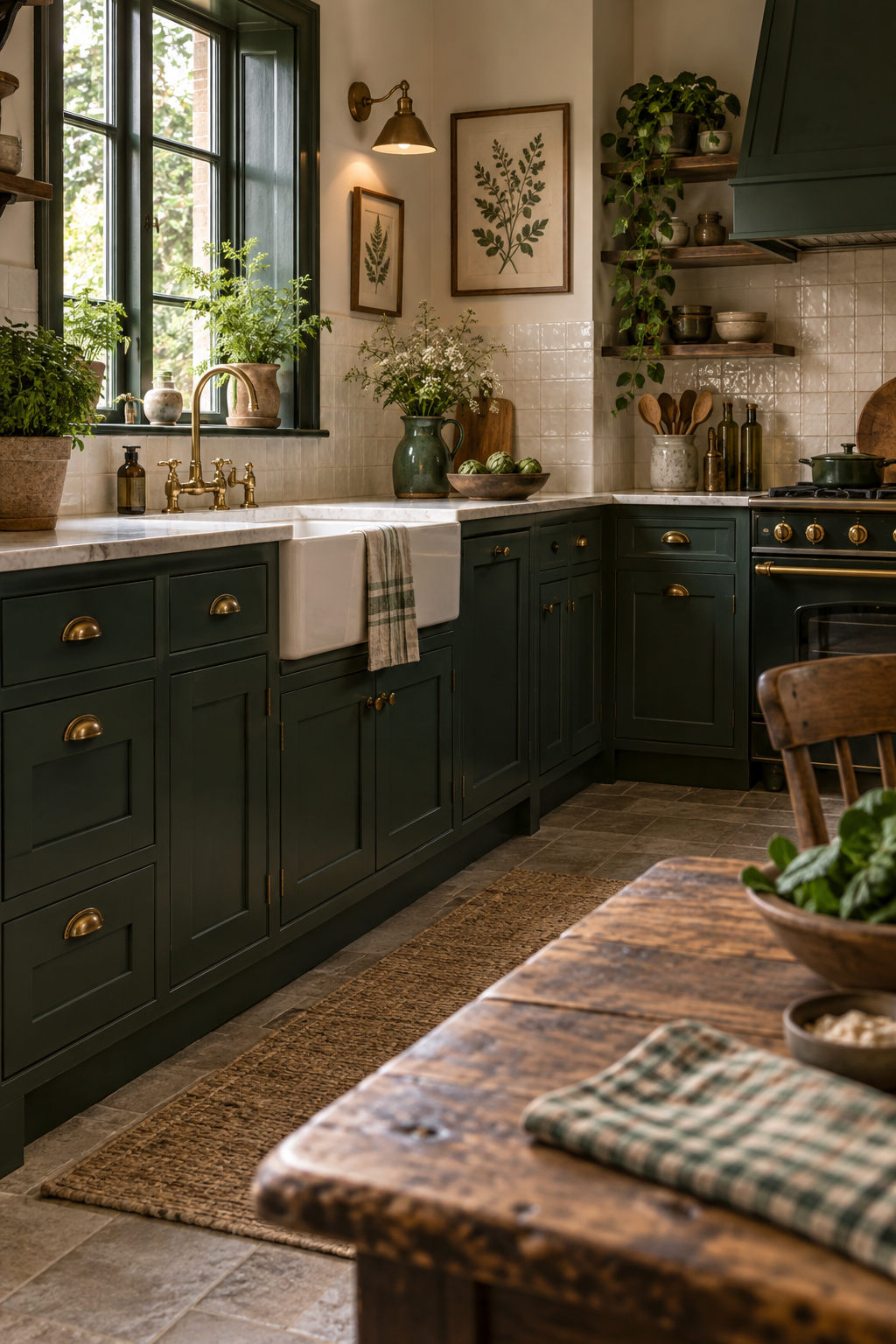
Choose one dark anchor before changing the whole room: lower cabinets, a freestanding cupboard, or a single wall. Forest green, smoky blue, and aubergine each create a different mood. Keeping the first change contained lets you judge the effect before committing to more paint.
For a fruit-toned alternative to green, explore aubergine kitchen cabinets alongside your existing flooring and worktop. Test large movable samples in daylight and after sunset. A color that looks richly purple online may read almost brown in your kitchen.
Keep adjacent finishes simple enough to show the cabinet detail. Clean, prepare, prime, and finish according to the surface and coating instructions; replacing sound cabinetry is unnecessary if a suitable finish can give it the character you want.
2. Balance dark cabinets with a light working surface
A dark kitchen still needs somewhere for the eye to rest. Preserve a pale worktop, cream backsplash, or light ceiling, especially if the room receives limited daylight. A small amount of contrast can make cupboard edges and the preparation area easier to read.
The balance behind warm neutral living room ideas transfers well through oatmeal, ivory, and natural wood. Here, use those tones on wipeable surfaces instead of adding layers that complicate cooking. Existing cream tile may already provide the contrast your darker cabinets need.
For a more colorful direction, consider moody blue decorating ideas and repeat the chosen blue in just one small detail. Avoid adding several competing dark shades at once; make the main cabinet color feel intentional before expanding the palette.
3. Bring in wood with visible character
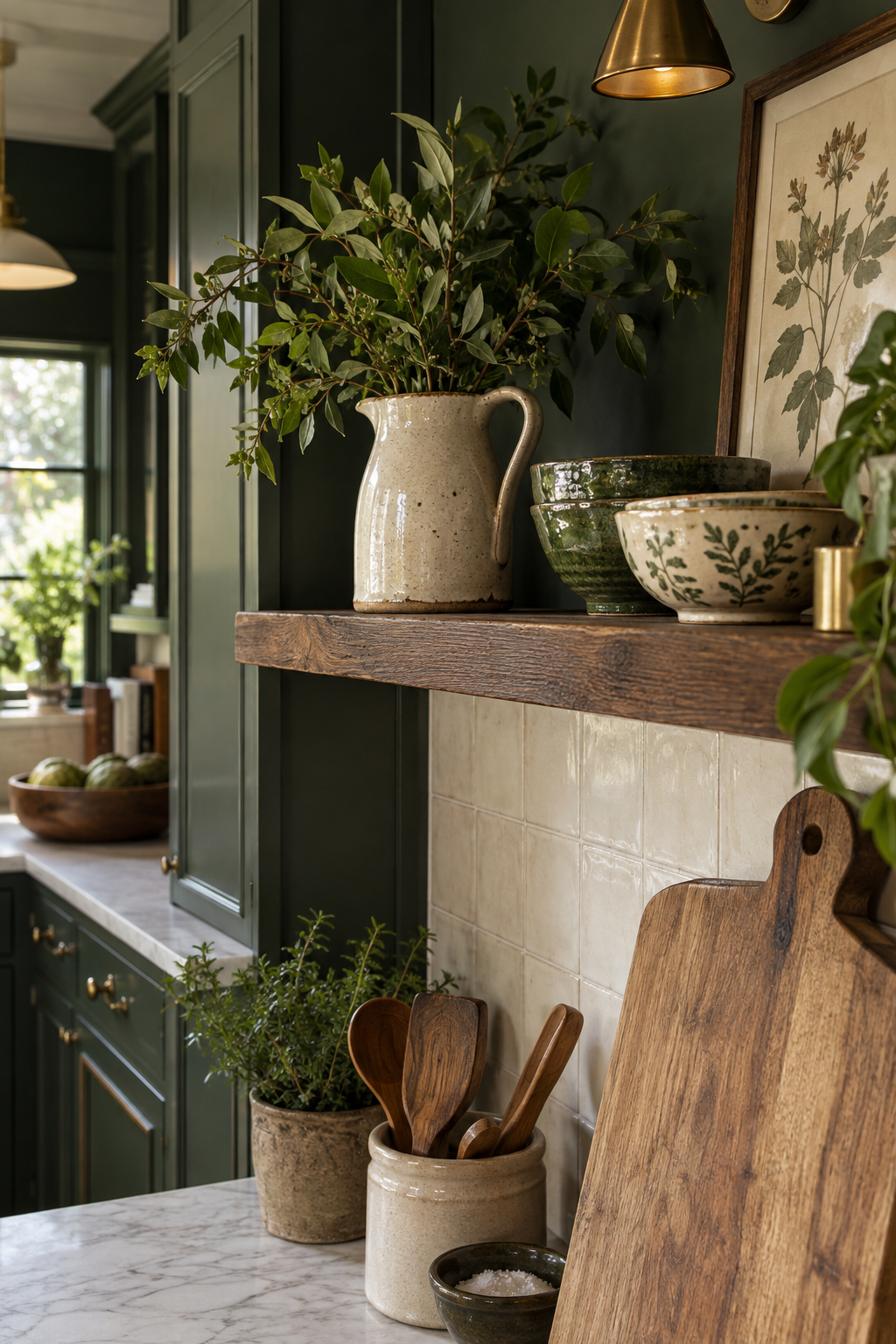
Wood gives this look its cottage character. Start with an existing table, a well-used chopping board, or a modest shelf rather than covering every surface in rustic timber. Visible grain brings variation to a room where the painted areas are deliberately restrained.
Choose the piece around its job. A board used for food needs appropriate care; a decorative reclaimed plank is not automatically a suitable preparation surface. Keep frequently used boards accessible and dry them properly before putting them away.
If you add a shelf, check the wall and fixing requirements and keep it shallow enough to avoid awkward head clearance. Let a cream jug and two everyday bowls stand against the dark wall. Leaving part of the shelf open makes the wood itself a feature.
4. Layer useful light with a softer evening glow
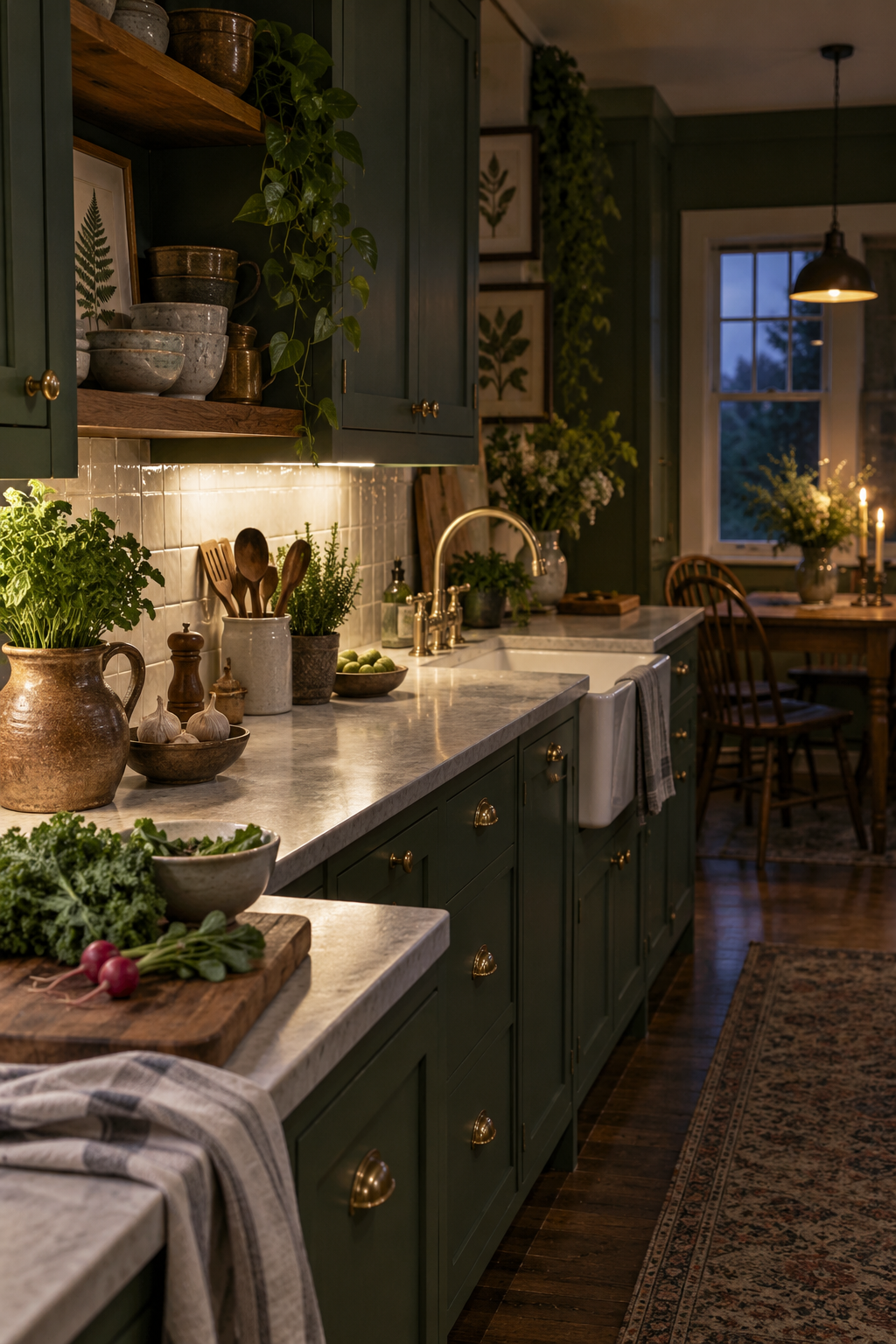
Separate the light you need for cooking from the glow you want afterward. The sink and preparation area should remain clearly lit even when a pendant is dimmed. Dark surfaces can look beautiful in photographs while leaving real work areas frustratingly shadowy.
Assess your existing lights before replacing fittings. Look for shadows cast by your body when standing at the counter, and consider suitable under-cabinet lighting where needed. Any new installation should suit the location and be carried out appropriately.
Use a warmer evening layer around a dining corner or dresser, keeping fittings and cords clear of water, heat, and preparation space. Matching the character of visible bulbs helps the room feel coherent. Aim for soft highlights on wood and ceramics without turning cream walls yellow.
5. Soften the room with washable cottage textiles
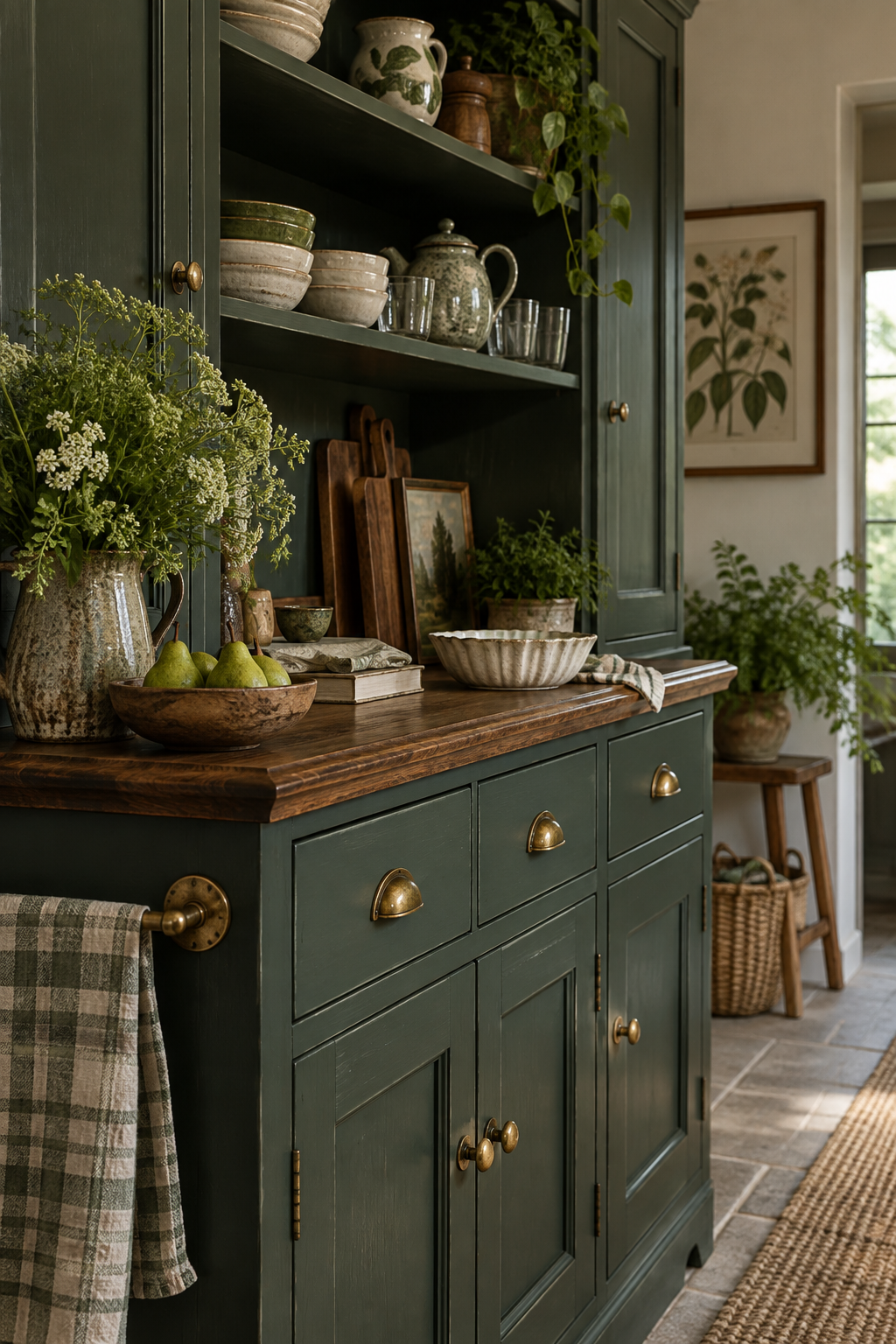
Introduce cottage pattern through one washable textile: a restrained floral curtain, a checked seat cushion, or a striped tea towel. Choose a pattern that repeats the cabinet color so it feels connected rather than like a separate decorative theme.
Keep window fabric clear of cooking heat and flames, and preserve ventilation and access to handles. A short curtain may work at a suitably positioned window; an uncovered window is better when fabric would interfere with everyday use.
For more confidence mixing accents, use bold color combinations as a starting point, then reduce the palette to a dark anchor, a light neutral, and one supporting color. Prefer textiles you can launder easily, and avoid a floor runner if it catches doors or creates a trip point.
6. Make everyday dishes part of the display
Display the dishes you reach for rather than assembling a shelf of props. Cream bowls, a sturdy teapot, and a few glasses bring domestic warmth to dark cabinetry. Repeat one material or color so mismatched pieces still feel related.
Keep most storage closed if open shelves become a cleaning burden. One small display area can establish the mood without exposing every jar and appliance. Place heavier pieces lower down, and keep stacks stable and comfortably within reach.
The selective layering in maximalist decor ideas on a budget is useful here: gather existing objects, remove the weak extras, and let a few favorites carry the story. Check older tableware for suitability before serving food; decorative appeal alone does not establish that a piece is food-safe.
7. Add botanical detail without filling the counter
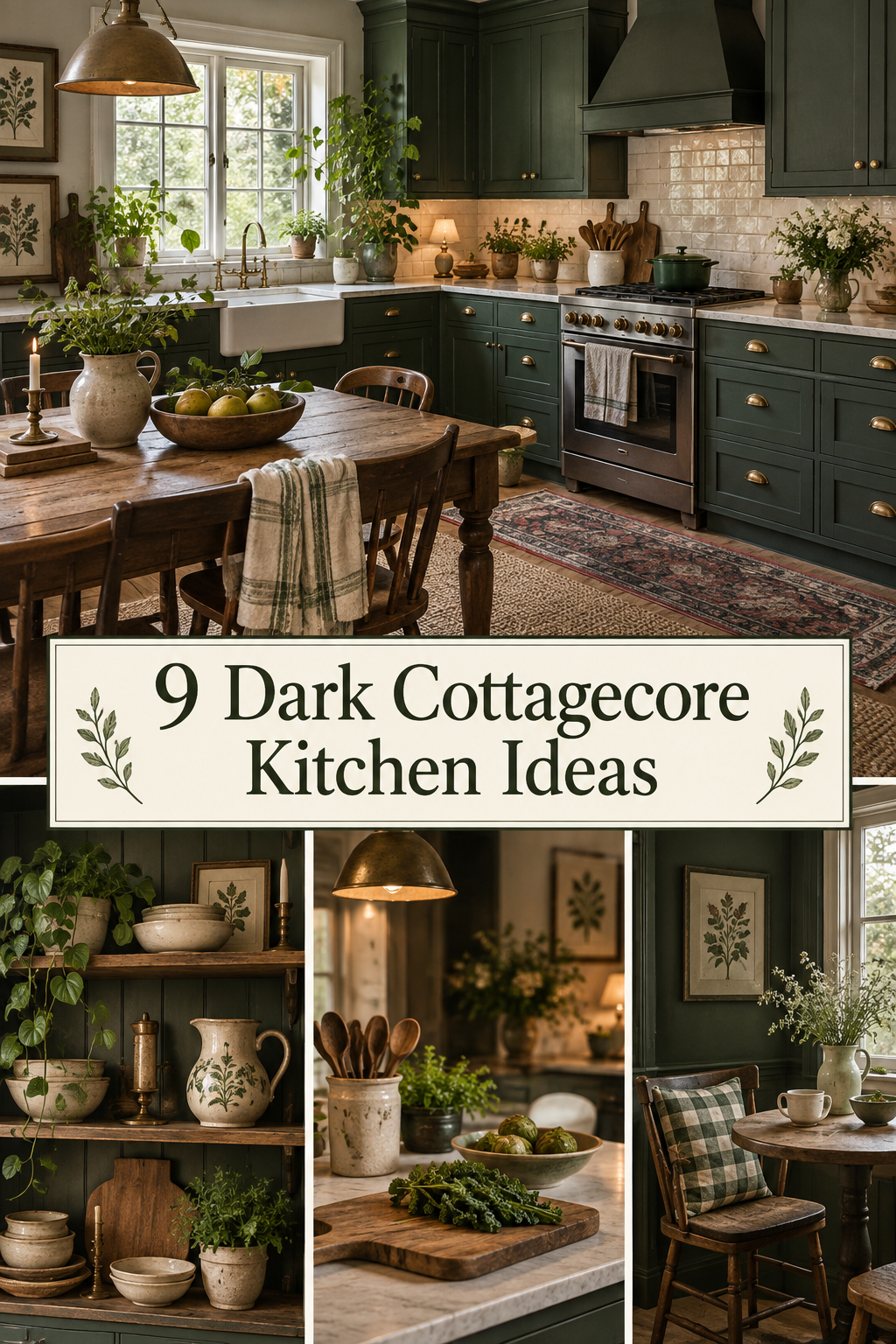
Use botanical detail to suggest a cottage garden without turning the worktop into a greenhouse. One framed botanical print on a dry wall can provide the same visual connection when a live plant would compete with cooking space.
If you grow herbs, choose a position with light suited to the plant and use a pot that manages drainage. A windowsill should remain usable, with nothing obstructing its opening. Plants belong away from heat and splattering oil.
Keep dried arrangements outside the cooking area, or skip them if they gather dust. A single washable vase with a small seasonal stem can be enough. Echo the greenery elsewhere through the cabinet color rather than adding more pots to every available corner.
8. Finish with two ideas: vintage hardware and a breakfast perch
Idea eight is a hardware refresh. A simple knob or pull with an aged-looking finish can change the rhythm of plain doors. Measure existing hole spacing, test the grip, and check whether the new hardware covers old marks before ordering a full set.
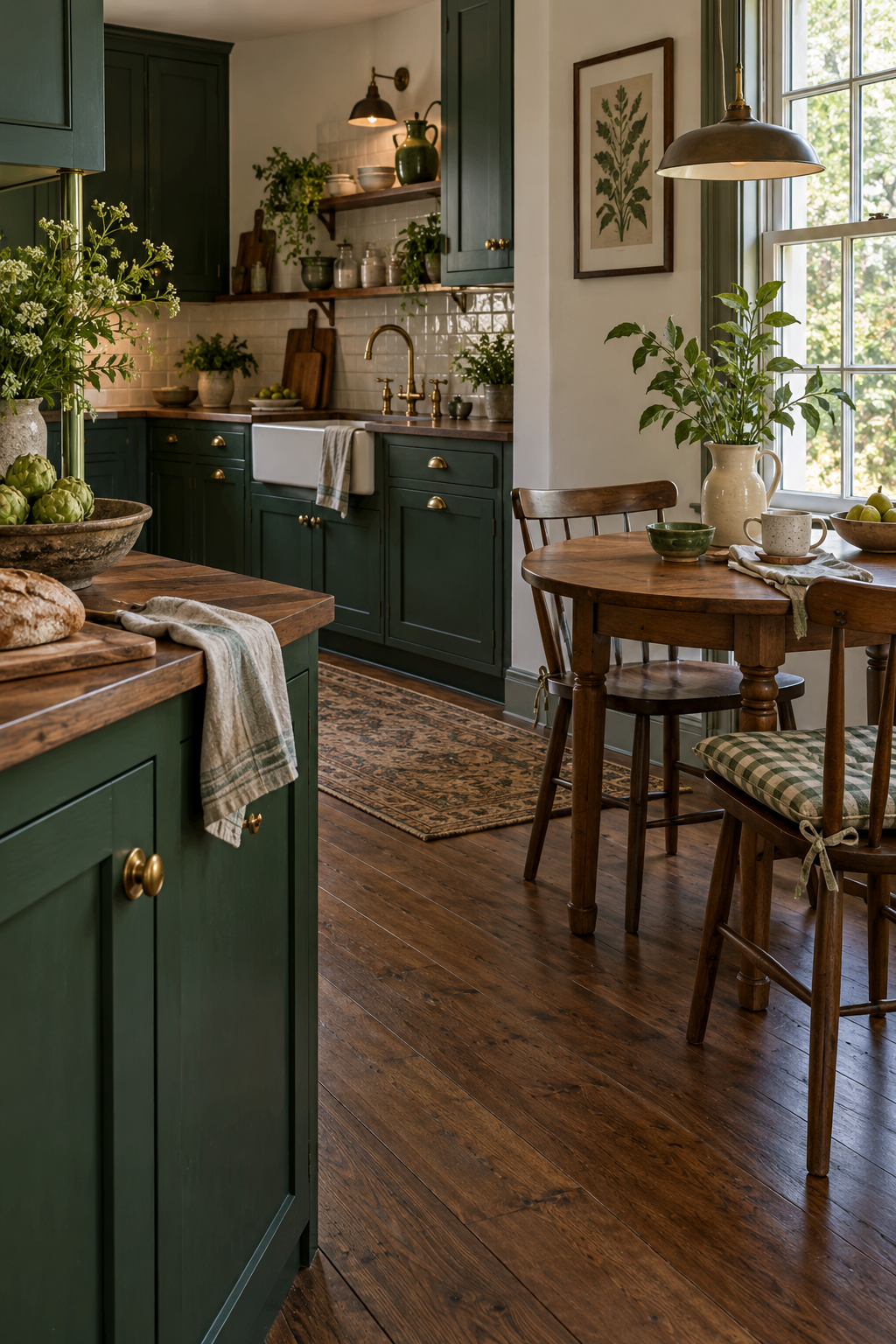
Idea nine is a compact breakfast perch. If space allows, pair an existing small table with comfortable seating and a washable cushion. The planning principles in studio apartment layout ideas help here: preserve appliance access and chair movement before creating a cozy corner.
In a narrow kitchen, keep the dining spot outside the cooking route or omit extra furniture and use an adjoining area. Carry over a dark painted detail, wood, and one patterned textile. These two finishing ideas add personality through touch and daily use rather than another layer of countertop decoration.
Final thoughts
Begin with the part of the room you already like: cream tile, a wooden table, or a favorite jug. Add one darker element, check the lighting, and use the kitchen for a few days before layering in more. The most convincing cottage mood comes from useful, familiar objects arranged with care.
Frequently asked questions
Can a small kitchen carry dark cottagecore colors?
Yes. Start with lower cabinets or one cupboard, preserve a pale surface, and check task lighting. The amount of daylight and the existing finishes matter more than applying a fixed rule about room size.
How can renters try this style?
Use existing furniture, washable towels, freestanding ceramics, and artwork in suitable dry areas. Get permission before painting or changing fittings, and keep original hardware if an approved swap needs to be reversed.
Does dark cottagecore require antique furniture?
No. Ordinary wood furniture, simple painted cabinets, and everyday dishes can create the mood. Shape, color, texture, and thoughtful placement matter more than the age or price of a piece.
How do I keep the kitchen from looking gloomy?
Retain light contrast near the work area, avoid blocking windows, and light the surfaces where you cook. Add dark color gradually and assess the room in daylight and after sunset.
What is the easiest first change?
Style one useful area with a dark-colored textile, a wooden board, and a ceramic item you already own. If you like the relationship, test paint samples before taking on cabinetry.