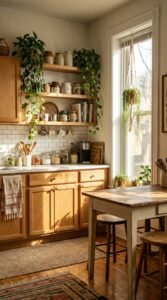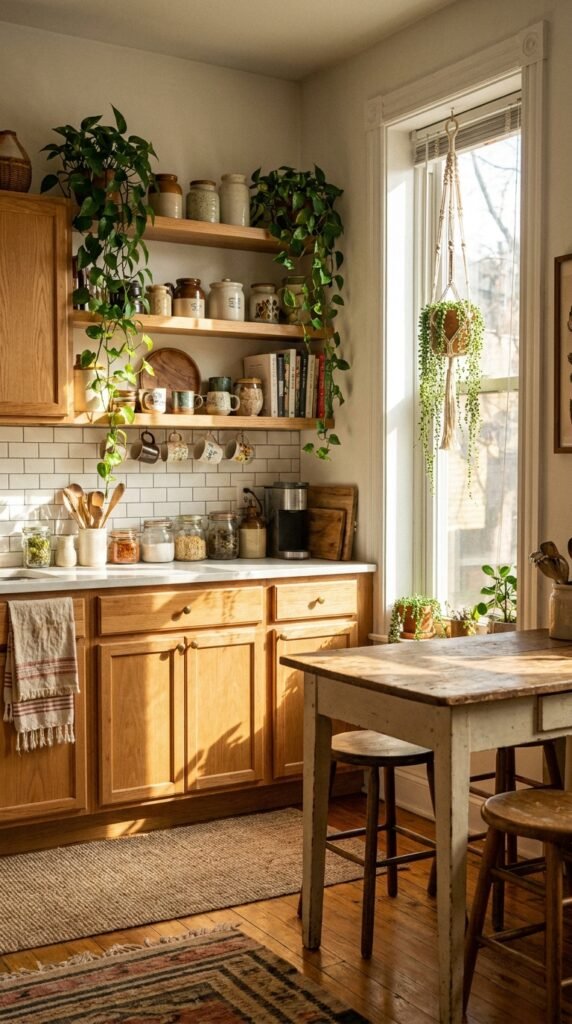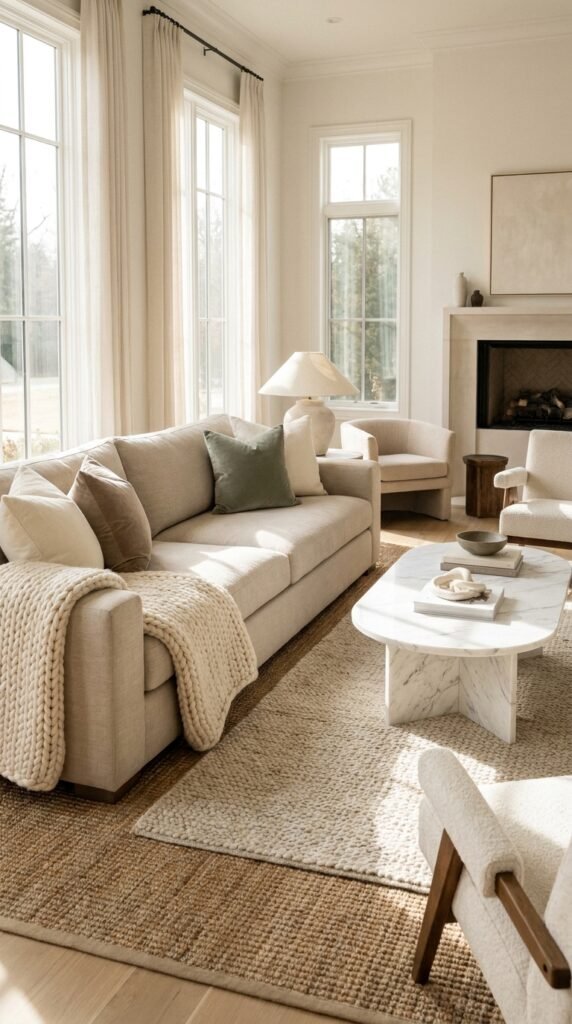

The modern home is no longer a series of isolated boxes; it is a fluid landscape of activity, connection, and comfort. At the heart of this evolution is the open-concept layout, a design choice that prioritizes breathability but often struggles with visual fragmentation. Achieving a true sense of ‘Kitchen-Living Harmony’ requires a unifying thread that balances the utility of the kitchen with the relaxation of the living room. Enter the timeless appeal of warm wood. By utilizing wood as a consistent material bridge, you can dissolve the boundaries between cooking and lounging. Whether it is through the honeyed hues of white oak or the deep richness of walnut, wood introduces an organic soul to the home. This guide explores how to strategically use timber elements to create a seamless transition, ensuring your open-plan space feels like a single, cohesive sanctuary rather than two disparate zones competing for attention.
The Foundation: Seamless Flooring and Architectural Beams
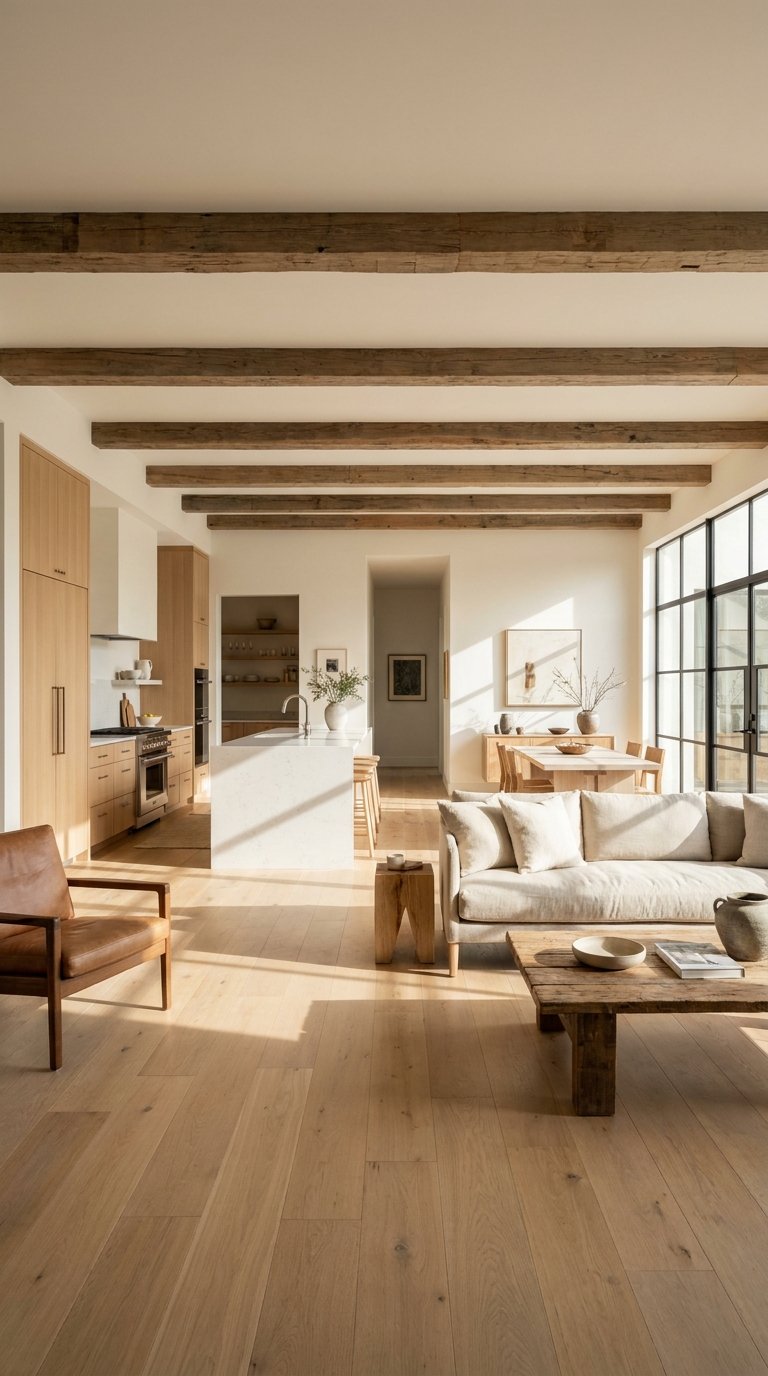
Open concept living room and kitchen with continuous light oak flooring and wooden ceiling beams.
SEO Alt: Open concept living room and kitchen with continuous light oak flooring and wooden ceiling beams.
The most effective way to anchor an open-concept space is through continuous flooring. By running high-quality hardwood or luxury wood-look planks from the kitchen island all the way to the living room fireplace, you create an uninterrupted visual plane that makes the area feel significantly larger. To further elevate this harmony, consider echoing the floor’s warmth overhead. Exposed timber ceiling beams act as a rhythmic architectural element, drawing the eye upward and physically ‘tying’ the two zones together. This structural repetition ensures that the transition between the culinary and social hubs feels intentional, grounded, and deeply inviting.
Material Echoes: Mirroring Tones in Cabinetry and Accents
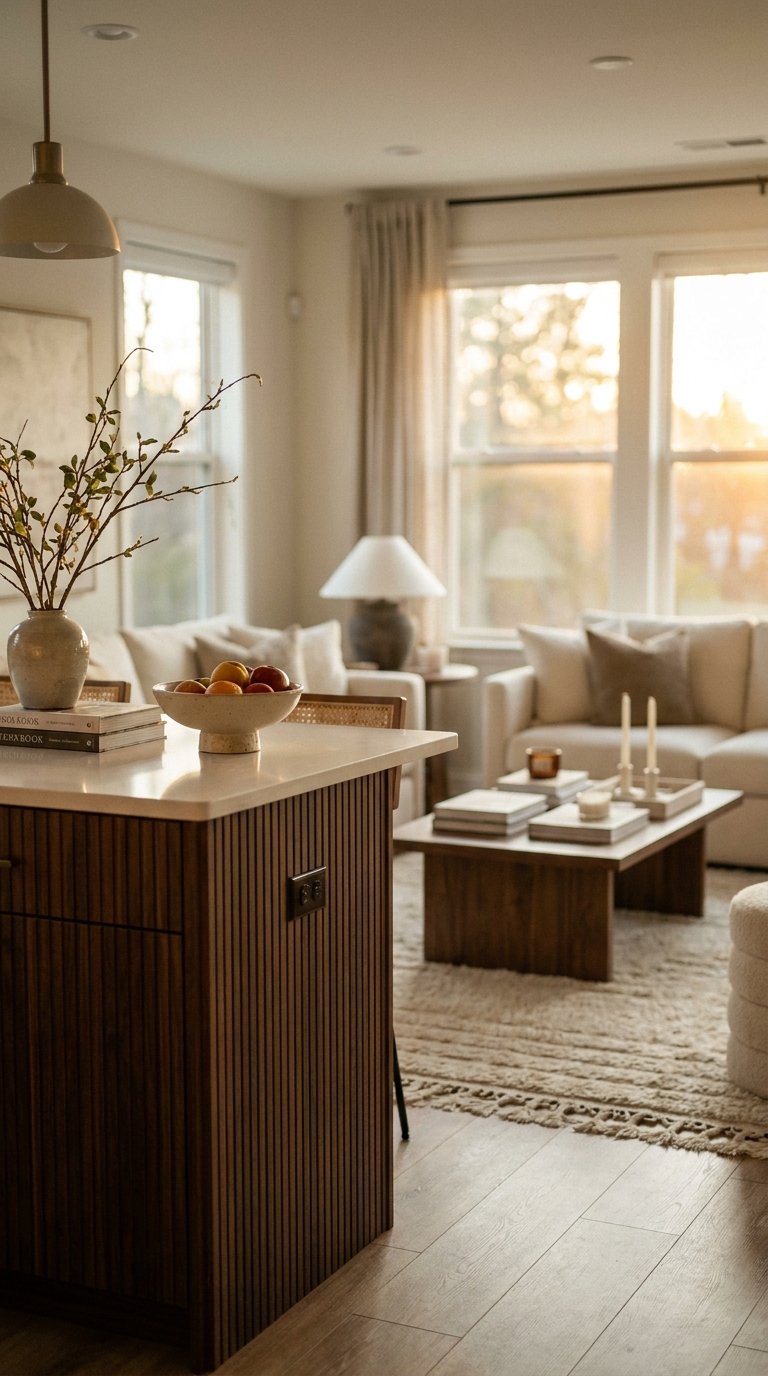
Matching walnut wood kitchen island and living room furniture for a cohesive interior design.
SEO Alt: Matching walnut wood kitchen island and living room furniture for a cohesive interior design.
Harmony is found in the details. To bridge the gap between a functional kitchen and a plush living room, use ‘material echoes.’ If your kitchen features walnut cabinetry, introduce a walnut coffee table or floating shelves in the living area. This repetition of wood species and stains creates a subconscious rhythm for the eye. Avoid perfectly matching every piece; instead, aim for complementary undertones. By mirroring the wood grain of the kitchen island in the living room’s media console, you create a sophisticated dialogue between the spaces, making the entire floor plan feel curated and interconnected.
Softening the Grain: Balancing Wood with Tactile Textiles
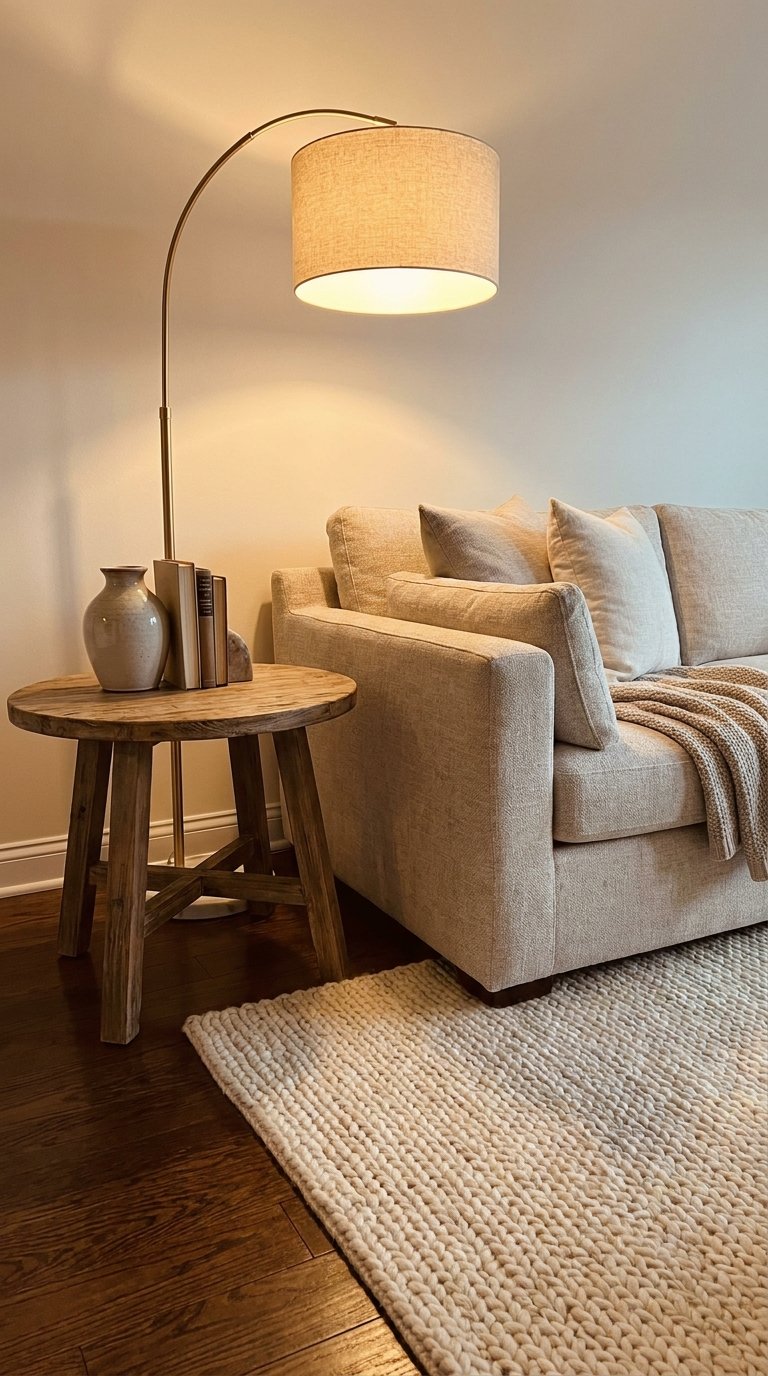
Cozy living room corner with wood furniture, wool rug, and warm ambient lighting.
SEO Alt: Cozy living room corner with wood furniture, wool rug, and warm ambient lighting.
While wood provides the ‘Warm Wood Ties’ that define the layout, balance is key to preventing the space from feeling too heavy or rustic. Soften the hard surfaces of timber with layered textiles. Think linen drapes, wool rugs, and velvet cushions in earthy tones like sage, terracotta, or cream. These soft elements act as a buffer, absorbing sound in large open areas while highlighting the natural luster of the wood. Strategic lighting—such as warm LED strips under wooden shelves or a statement pendant over a wooden dining transition—enhances the wood’s grain, adding depth and a cozy glow to the shared environment.
Frequently Asked Questions
Can I mix different types of wood in an open-concept living area?
Yes, mixing wood types adds depth, but you should stick to a consistent undertone (either warm, cool, or neutral). Limit yourself to two or three different wood finishes and repeat them throughout both the kitchen and living room to maintain harmony.
What is the best wood color for a small open-concept space?
Lighter woods like White Oak, Ash, or light Maple are ideal for smaller spaces. They reflect more light and make the open-concept area feel airier and more expansive while still providing the natural warmth of timber.
How do I prevent my open kitchen and living room from looking too ‘woody’?
Balance is essential. Use the ’60-30-10′ rule where wood is a primary or secondary element. Break up the wood surfaces with different materials like stone countertops, metal fixtures, and plenty of soft textiles like rugs and curtains.