
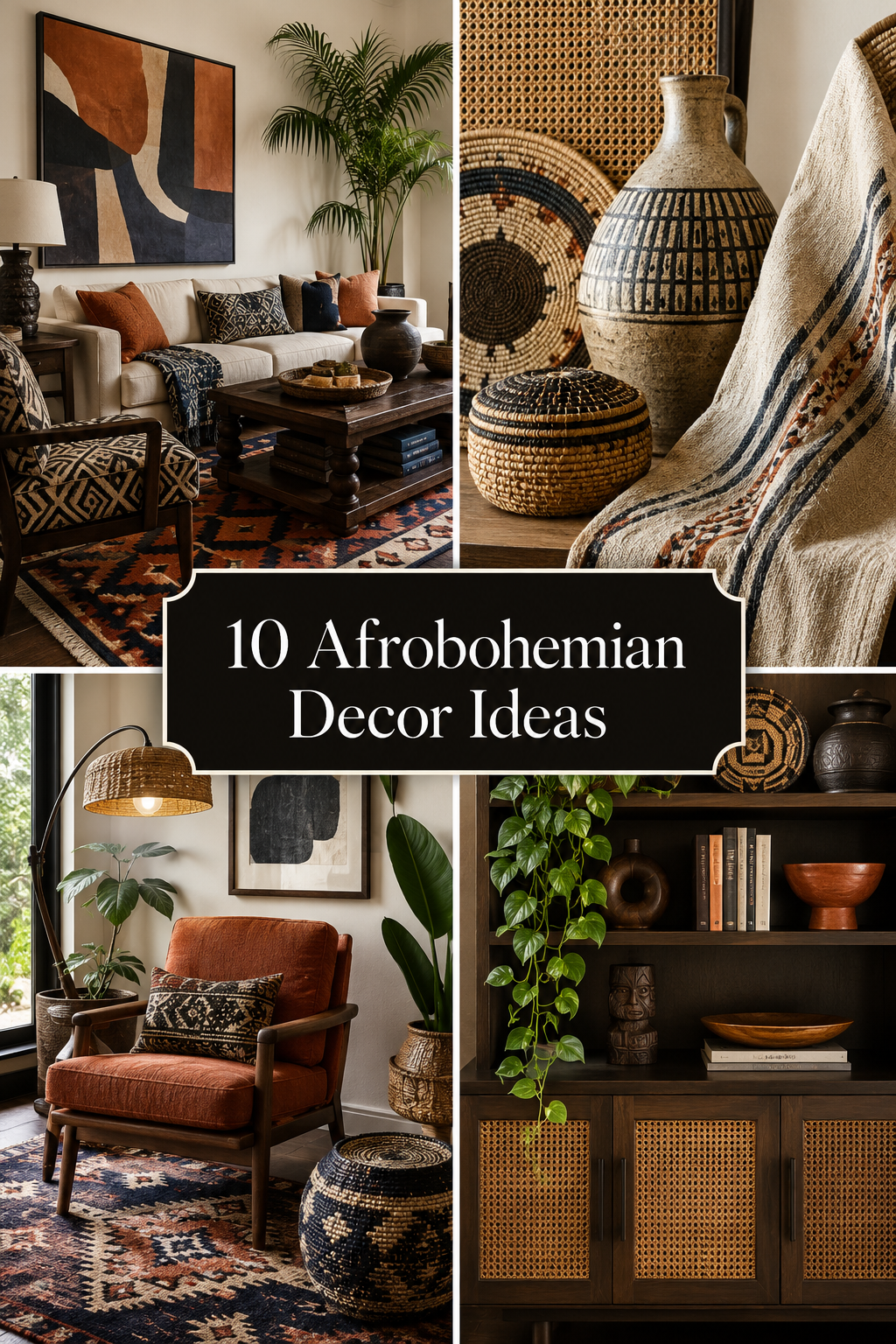
Afrobohemian home decor brings the ease and expressive layering of bohemian interiors together with a thoughtful African diasporic craft vocabulary. The result can feel warm, rhythmic and personal: rich earth colors, tactile natural materials, bold geometry, generous greenery and objects chosen for their story rather than their ability to match perfectly.
The most convincing rooms are curated, not themed. Instead of filling every surface with motifs, establish a practical foundation and build contrast through textiles, art, lighting and a few sculptural accents. The ten ideas below can be introduced gradually, whether you are reshaping a living room or refreshing one renter-friendly corner.
Key takeaways
- Begin with a controlled palette of earthy neutrals and two or three richer accents.
- Balance energetic pattern with quiet surfaces so individual pieces remain legible.
- Use natural texture at several scales, from large furniture to small woven details.
- Choose culturally rooted art and craft with care, provenance and personal meaning.
- Layer lighting, plants and varied heights to make the room feel animated.
- Edit the finished room so it feels collected without becoming crowded.
1. Build an earthy, high-contrast color story
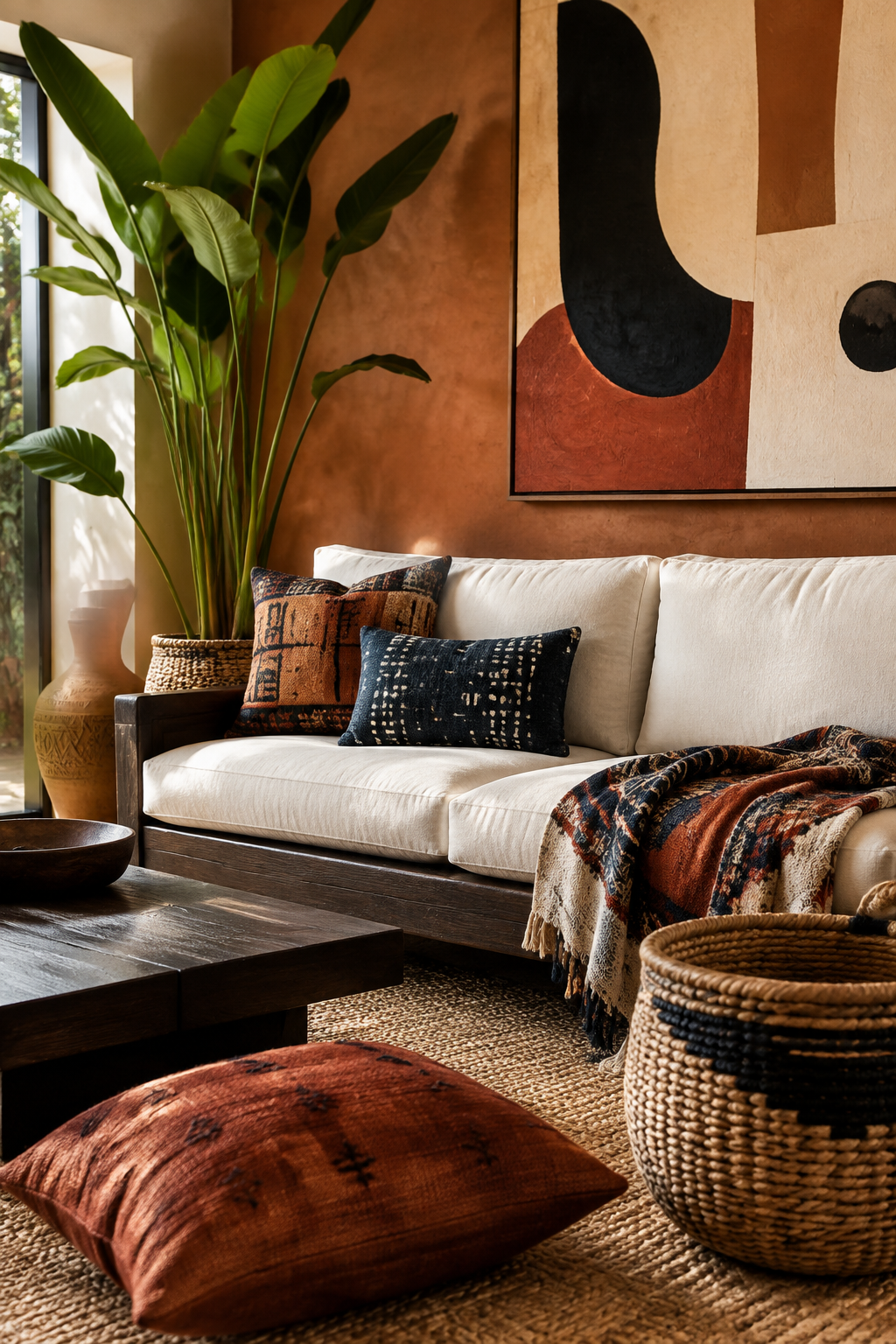
Start with three to five colors that can repeat across the room. Clay, ochre, warm ivory, espresso and leafy green create an adaptable base; indigo, rust or paprika can supply a sharper note. Dark wood, blackened metal or deep brown outlines keep the warmer hues from dissolving into a muddy wash.
Test the palette in daylight and under evening lamps before committing. If the room is small, keep walls and the largest upholstery relatively quiet, then concentrate saturated color in art, cushions and one substantial textile. Repeating each accent at least twice makes the variation feel deliberate rather than scattered.
2. Anchor the room with wood, cane and woven fiber
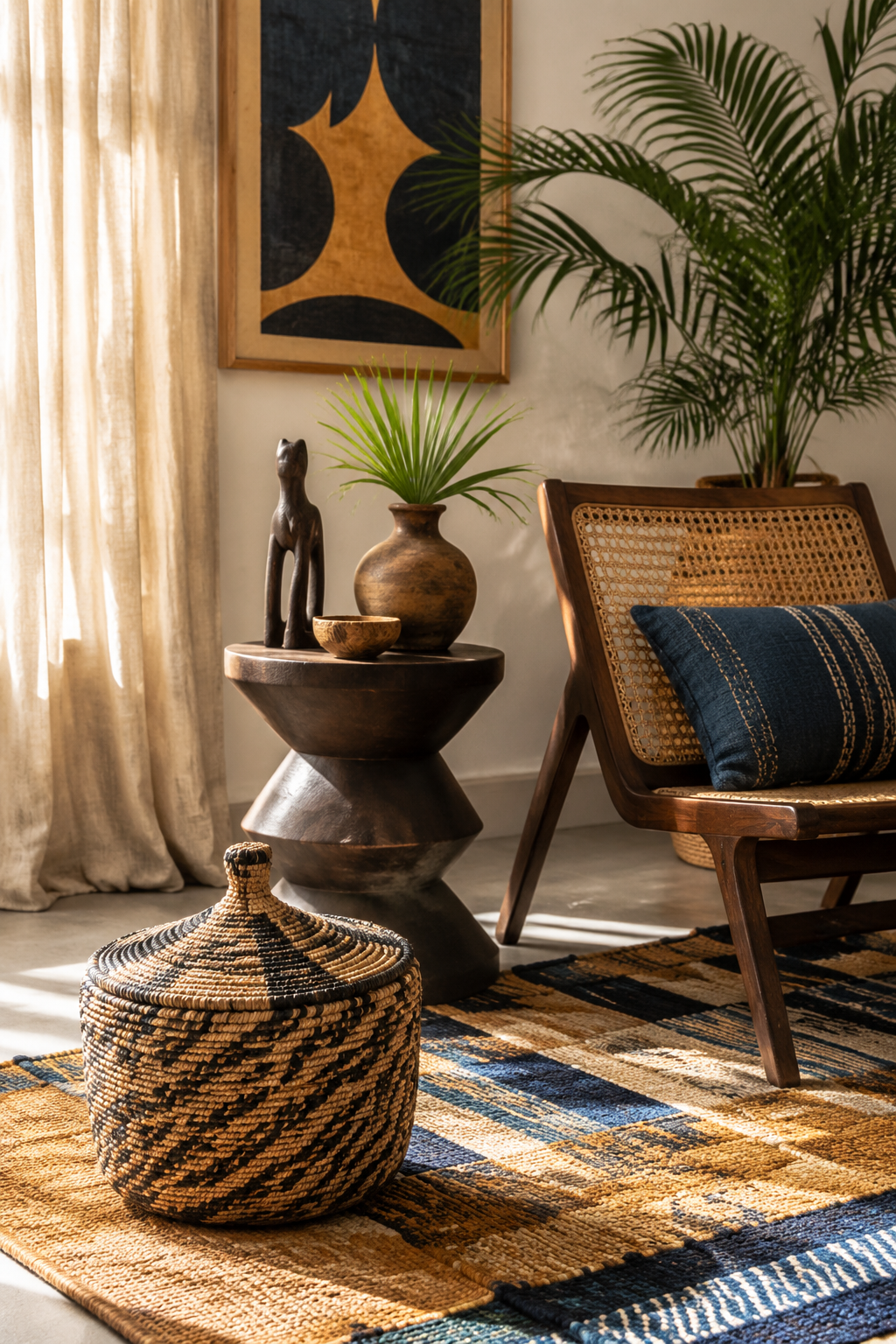
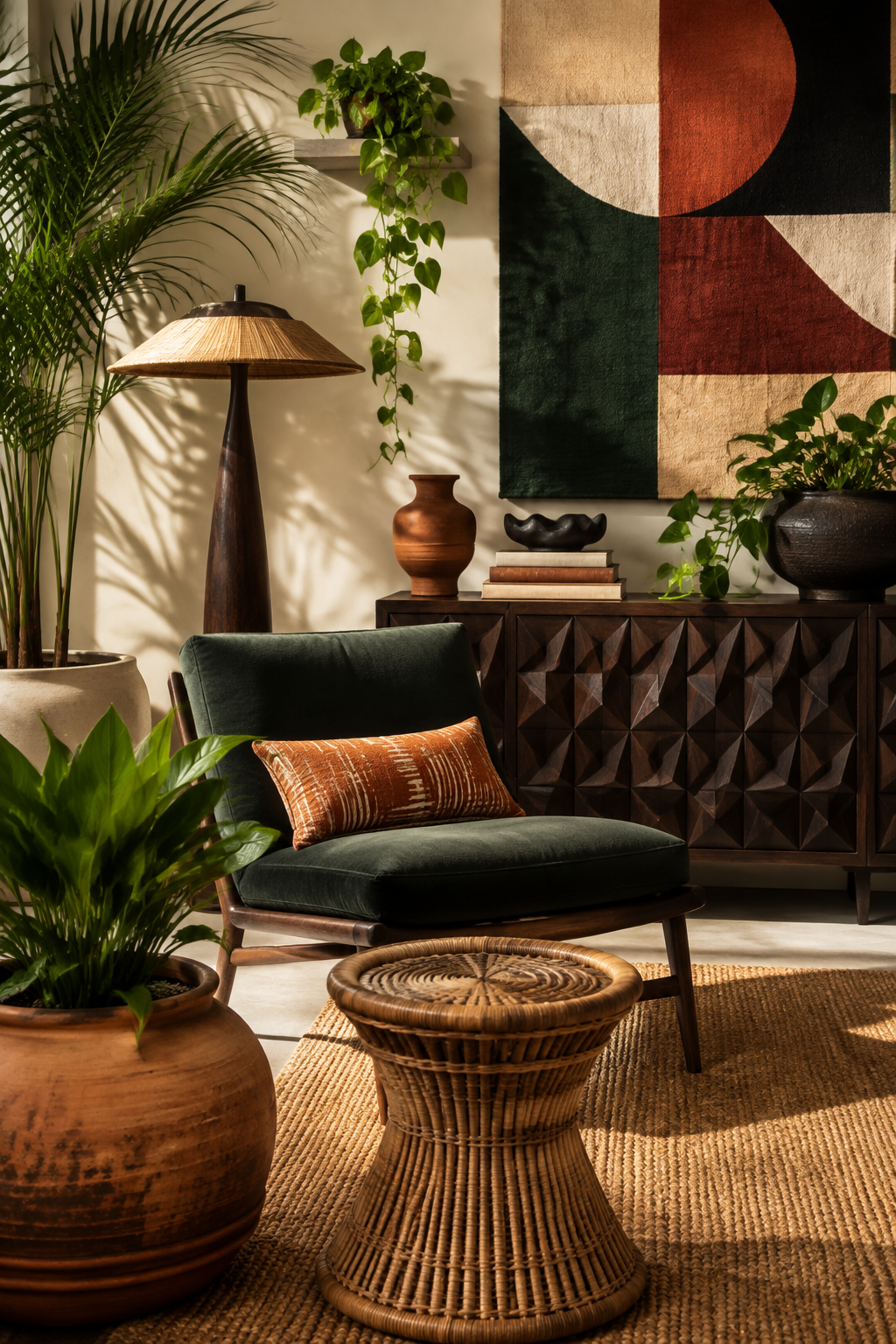
Natural materials give a layered room visual calm. Begin with one anchor such as a substantial wood coffee table, cane-front cabinet or woven lounge chair. Add smaller textures at different scales: a broad braided basket, a fine-grained lampshade and a nubby linen curtain. Variation creates depth without requiring more color.
Avoid placing every woven object together, which can turn texture into a display theme. Spread materials across the room and leave breathing room around their silhouettes. In high-traffic areas, choose tightly woven rugs and sturdy baskets; reserve delicate open weaves for walls or lightly used storage.
3–4. Mix patterns by scale and repeat one connecting color
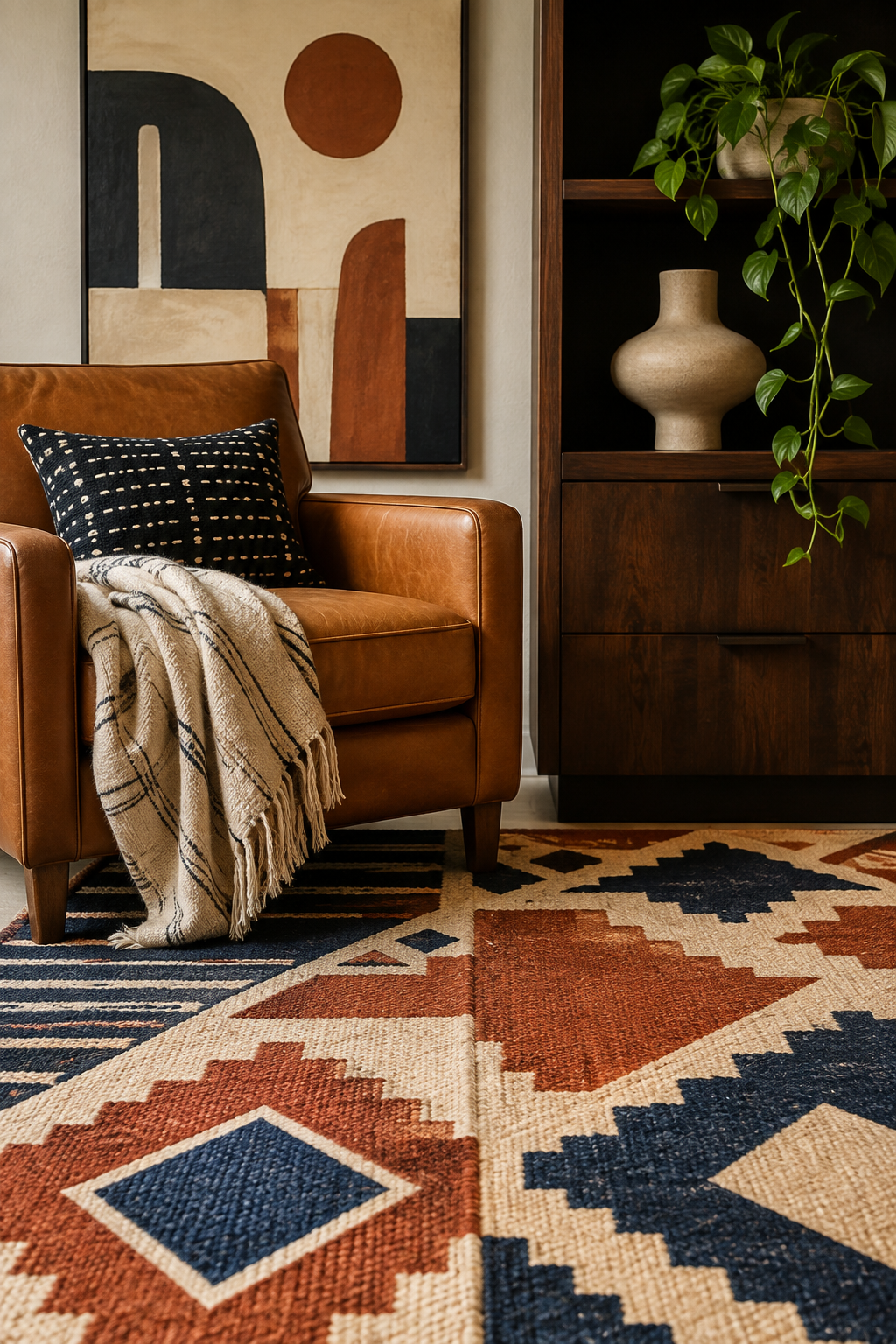
For the third idea, combine patterns of clearly different scales. A large geometric rug can coexist with a tighter cushion motif and a looser striped throw because the eye can distinguish their roles. Two equally bold patterns placed side by side are more likely to compete, so separate them with solid upholstery or an unpatterned section of wall.
The fourth idea is to repeat one connecting color. Pull indigo from the rug into a cushion, a painted vessel or a line within the wall art. The pieces do not need identical origins or motifs; the repeated hue provides continuity. Keep culturally specific patterns distinct and accurately described rather than blending unrelated traditions into a generic look.
5. Give meaningful art enough room to lead
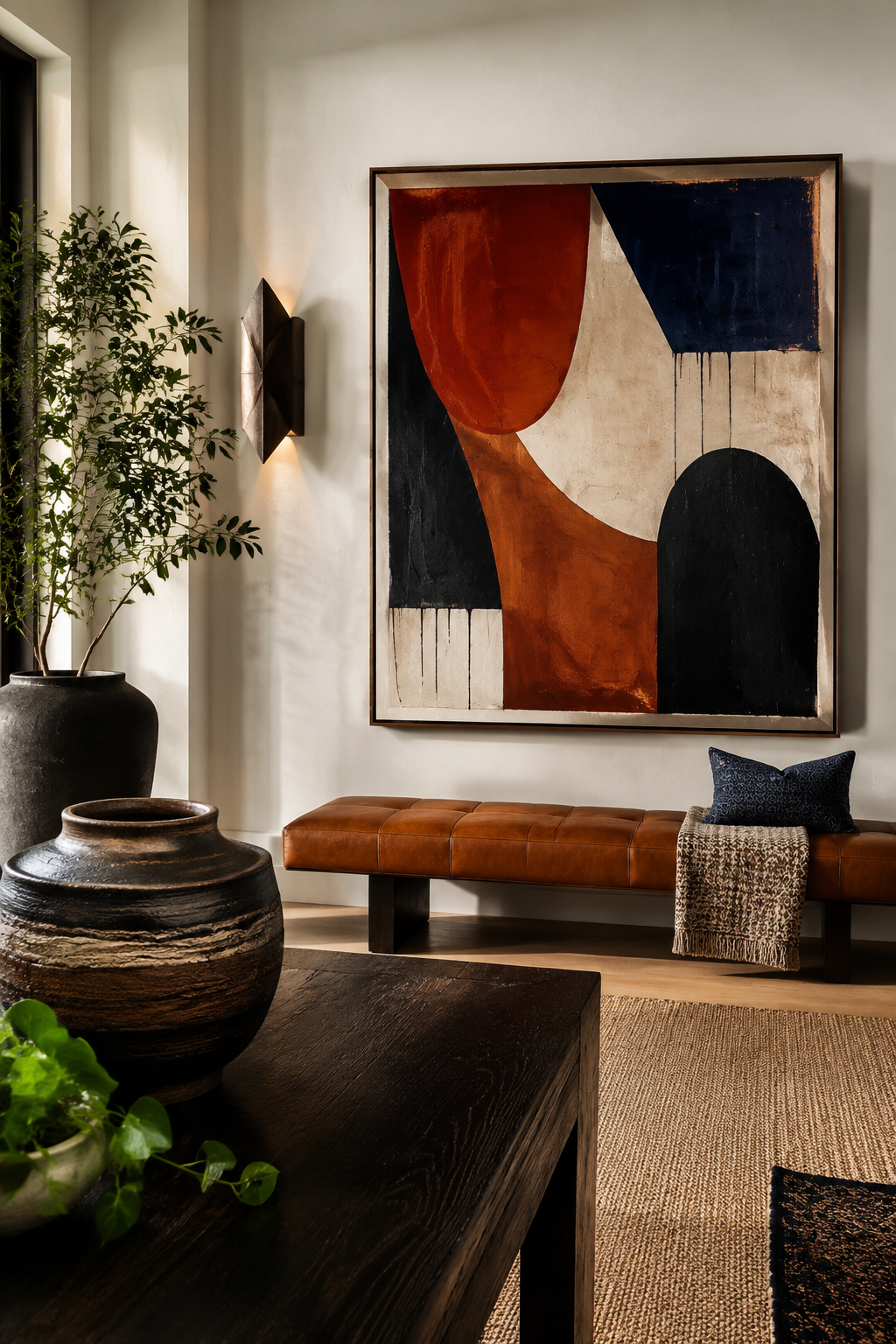
Choose one commanding artwork or a compact, thoughtfully spaced group instead of covering every wall. Look for work from identifiable artists and makers, and learn what you are buying. Contemporary painting, photography, fiber art and graphic prints can establish the room’s direction without relying on sacred, ceremonial or decontextualized objects.
Hang the focal piece in relation to the furniture beneath it: a broad work generally feels balanced when it occupies roughly two-thirds of the furniture width. Renters can lean a framed piece on a console, use a picture ledge or choose removable hanging hardware. A wall light or nearby lamp can make the art feel integrated after dark.
6. Layer lighting at three practical heights
A single ceiling fixture tends to flatten texture. Combine overhead ambient light with a mid-height floor or table lamp and a lower pool of light near a reading chair or shelf. Woven shades soften glare, while ceramic, carved wood or dark metal bases introduce shape even when the lamps are switched off.
Use warm-white bulbs with consistent color temperature so terracotta and wood remain rich rather than yellow. Direct one lamp toward a textured wall, plant or artwork to create gentle shadow. Keep cords clear of walking paths, and make sure every seat has useful illumination rather than treating lighting as decoration alone.
7–8. Add abundant greenery and vary the room’s height
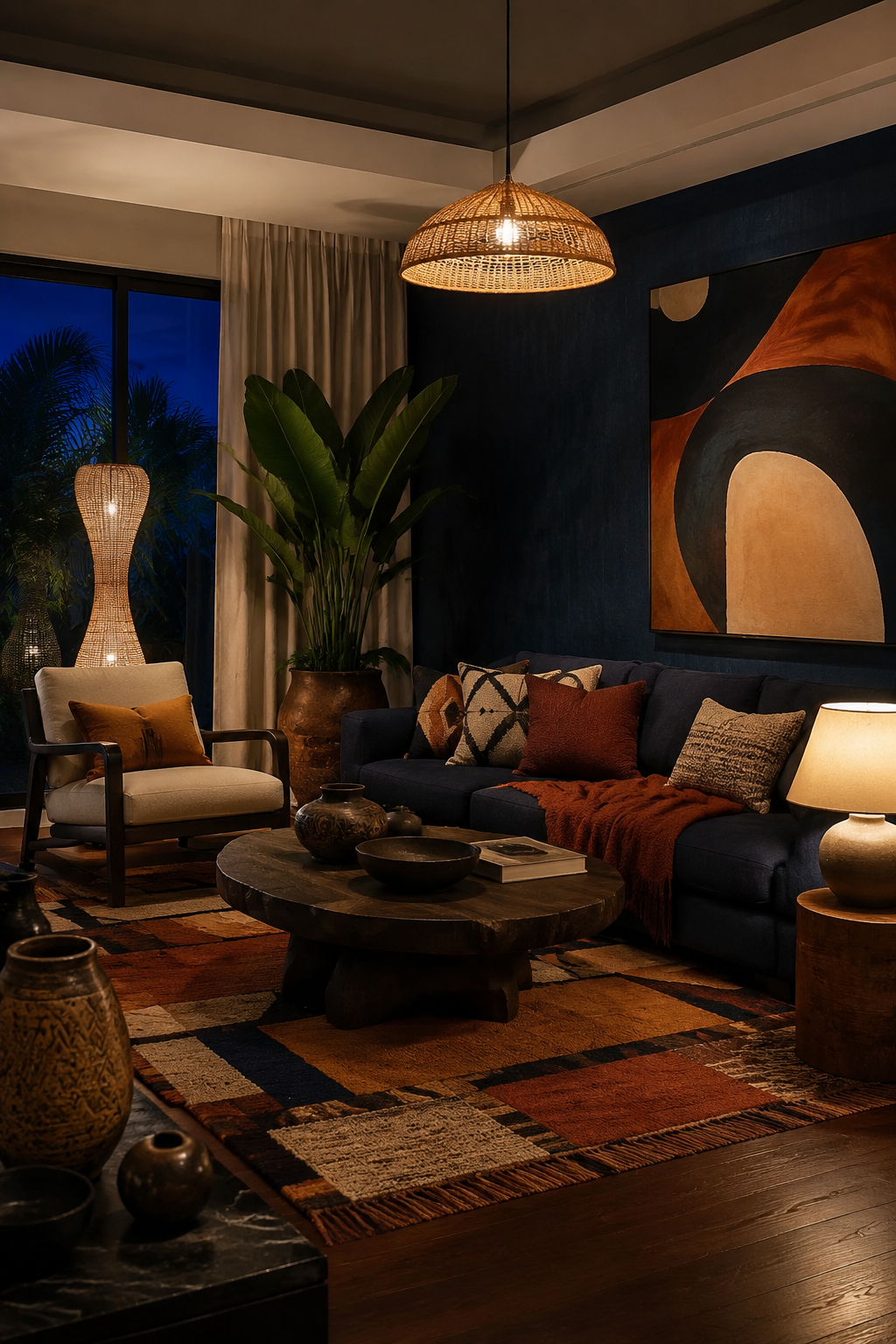
The seventh idea is to use plants as living structure. A tall palm or rubber plant can soften a hard corner, while a trailing plant draws the eye across a shelf. Choose varieties suited to the actual light and your care routine; one healthy specimen is more effective than several struggling plants. Terracotta, dark ceramic and woven cachepots reinforce the palette.
For the eighth idea, vary height throughout the composition. Pair a low lounge chair with a tall lamp, stack two books beneath a small object, or let a narrow floor sculpture rise beside a broad cabinet. This creates movement and prevents all decorative interest from forming one horizontal band. Preserve open floor area so the effect remains airy.
9. Display craft and personal objects with intention
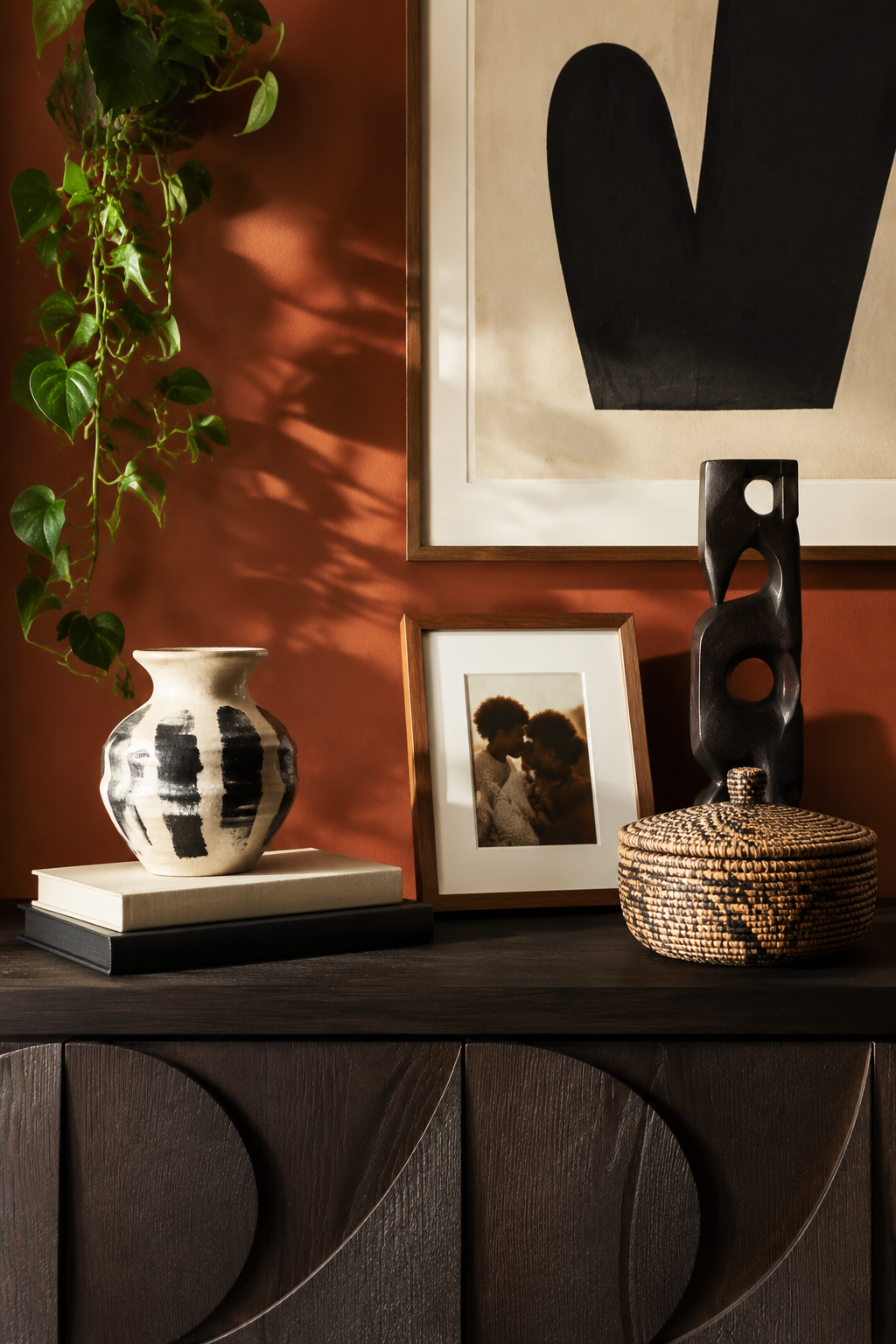
A collected room becomes personal through objects acquired over time: books, family photographs, contemporary ceramics, travel finds and work by local makers. Group a few pieces by color, material or shape, then vary their height. Odd-numbered arrangements often feel relaxed, but the objects’ meaning matters more than following a formula.
Buy culturally rooted craft from transparent sources whenever possible, and avoid using ritual or sacred items as anonymous props. Leave part of each shelf or tabletop empty so silhouettes remain visible and cleaning stays manageable. Rotate smaller pieces seasonally instead of keeping every possession on display.
10. Edit the layers and protect everyday function
Finish by removing, not adding. Photograph the room from the doorway and check where pattern, color or small objects bunch together. If every surface demands attention, clear one tabletop, simplify one textile layer or move a bold accent across the room. Negative space gives the most expressive pieces greater presence.
Then test the practical details. Can people set down a drink, open a cabinet and cross the room without squeezing past furniture? Keep approximately 18 inches between a sofa and coffee table, protect natural fibers from damp areas and add washable covers where pets or children gather. A successful room supports daily life while still feeling layered and distinctive.
Final thoughts
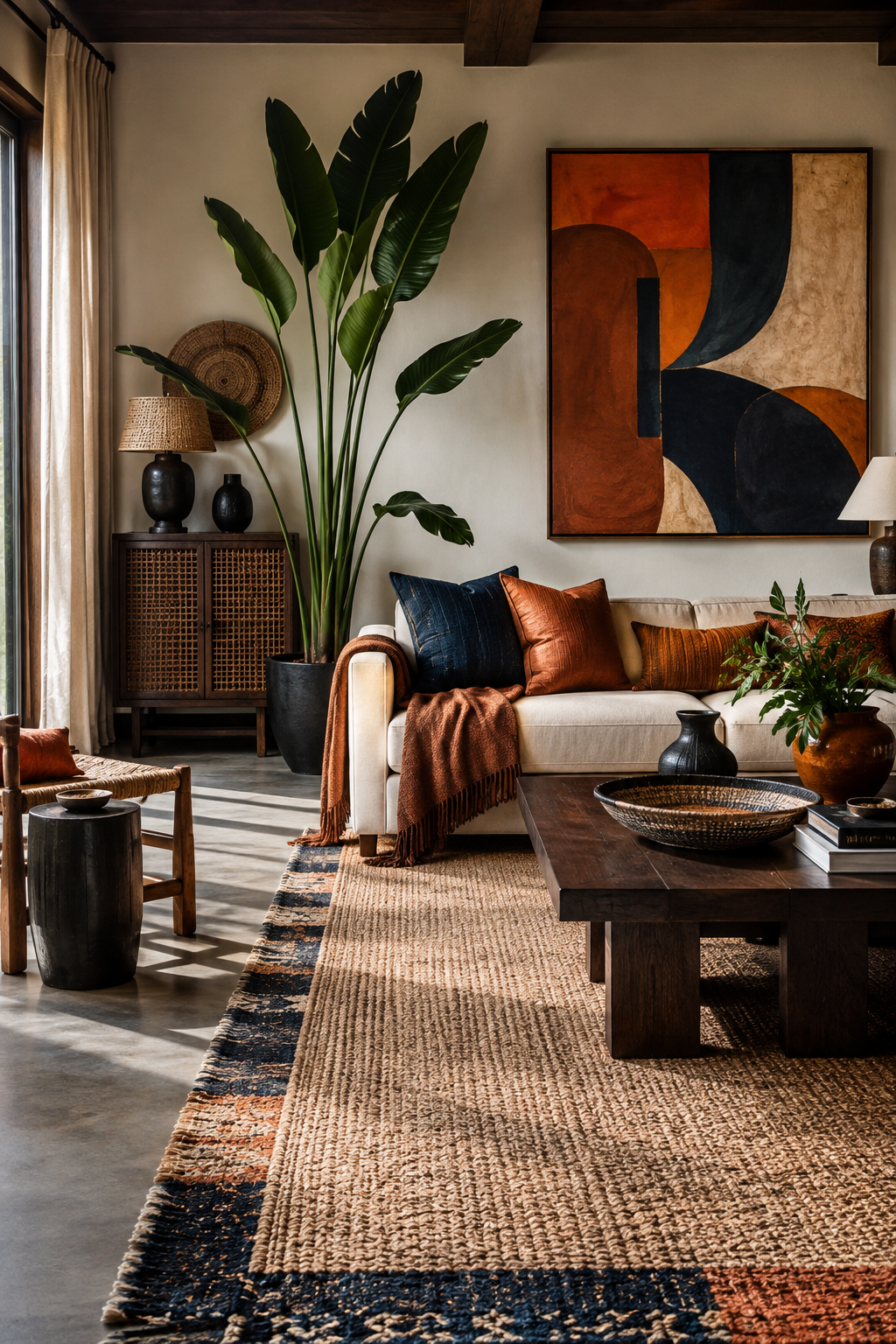
Afrobohemian home decor works best as an evolving conversation between color, craft, texture and personal history. Establish a clear palette, let natural materials anchor the room and add pattern, art, light and greenery in measured layers. Thoughtful sourcing and cultural specificity keep the result respectful as well as beautiful.
You do not need to complete the room at once. Begin with one useful anchor and one expressive focal point, then live with the arrangement before adding more. The pauses between purchases are often what turn a styled interior into a genuinely collected home.
Frequently asked questions
What colors work best for afrobohemian home decor?
Warm ivory, clay, ochre, rust, espresso and leafy green make a flexible foundation. Add indigo, paprika or black for contrast, and limit the room to three to five main colors so layered patterns still feel cohesive.
Can afrobohemian decor work in a small room?
Yes. Keep the largest surfaces calm, choose furniture with a practical scale and concentrate pattern in one rug, artwork or textile group. A tall plant, layered lighting and a few meaningful objects create depth without consuming much floor space.
How can renters create this look without permanent changes?
Use removable picture hardware, plug-in sconces, large framed art, textiles, plants and freestanding storage. Leaning art on a console or picture ledge also creates a substantial focal point without painting or altering the walls.
How do I mix patterns without making the room feel busy?
Combine one large-scale pattern with smaller motifs, separate them using solid areas and repeat a connecting color. If two pieces compete from across the room, remove one or relocate it so each pattern has space to register.
How can I approach culturally rooted decor respectfully?
Buy from identifiable artists, makers and transparent sellers, learn the origin and purpose of what you display, and avoid treating sacred or ceremonial objects as generic decoration. Favor contemporary work and pieces with genuine personal meaning.