

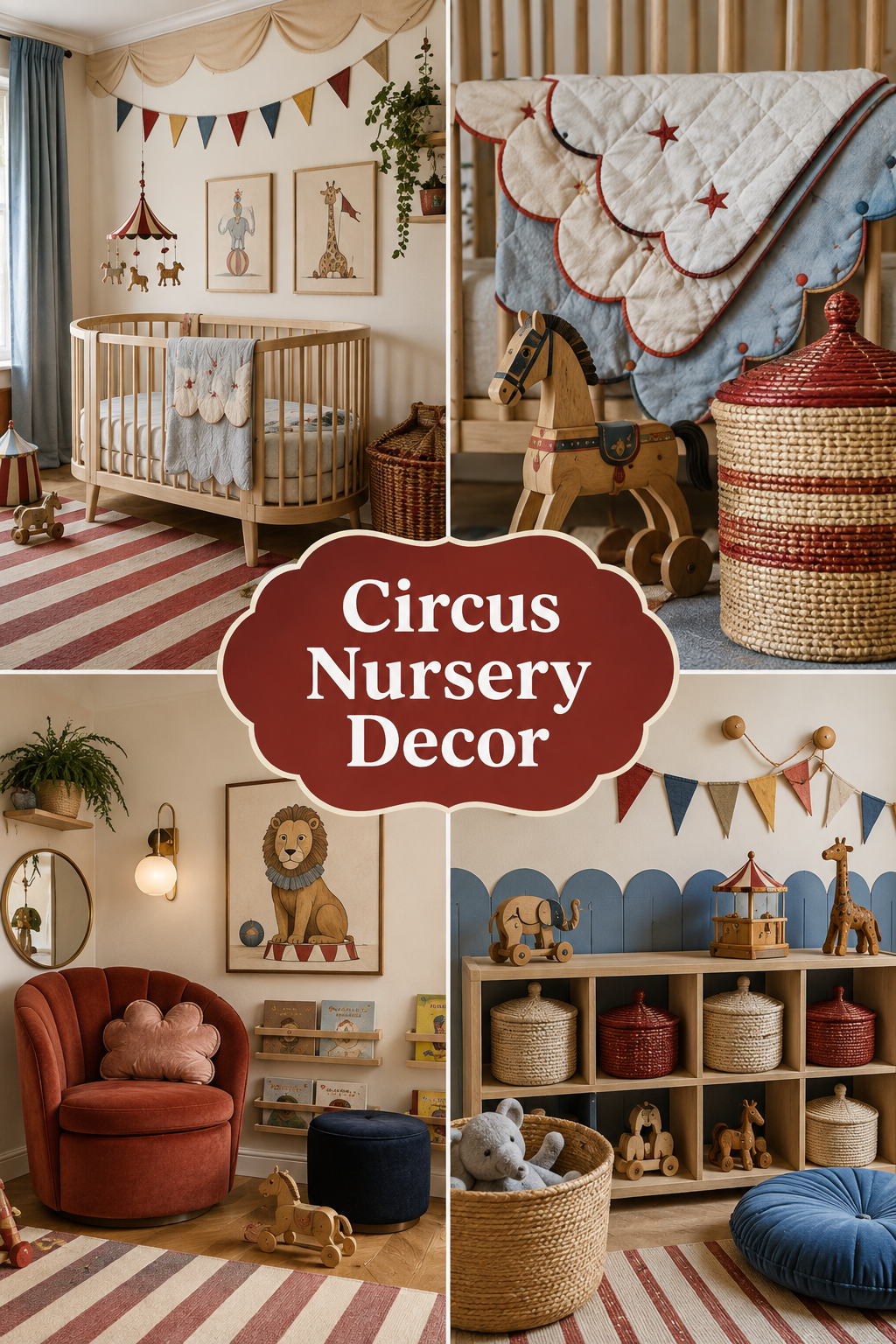
Circus nursery decor can be cheerful, imaginative, and surprisingly sophisticated when the theme is treated as a design vocabulary rather than a checklist of novelty objects. Stripes, scalloped edges, rounded silhouettes, faded poster colors, and a few playful animals can suggest the big top without turning the room into a stage set.
The most successful version gives the eye places to rest. Start with a calm background, choose two or three repeatable circus motifs, and let practical nursery pieces carry much of the visual weight. The result can delight a baby now while remaining flexible enough to suit a toddler later.
Key takeaways
- Build the room around one clear focal point instead of distributing circus motifs everywhere.
- Limit the palette to three or four colors plus a quiet neutral.
- Repeat stripes, scallops, or stars selectively so the theme feels connected.
- Keep sleep zones visually calmer than play and reading areas.
- Choose secure, age-appropriate decor and keep hazards away from the crib.
- Use removable accents so the room can mature without a complete redesign.
1. Choose a circus mood before choosing decorations
Circus style spans several distinct moods. A vintage European circus might use dusty red, faded blue, parchment, and dark wood; a softer nursery version could combine butter yellow, blush, sky blue, and cream. A graphic modern interpretation might rely on cobalt, tomato red, and crisp white. Select one direction before shopping or painting so every later choice has a filter. A simple mood board with one room image, two patterns, four colors, and three materials is enough. If you enjoy expressive rooms, these budget-conscious maximalist decor ideas show how repetition and editing can keep a layered scheme coherent.
2. Set a calm base with a controlled color palette
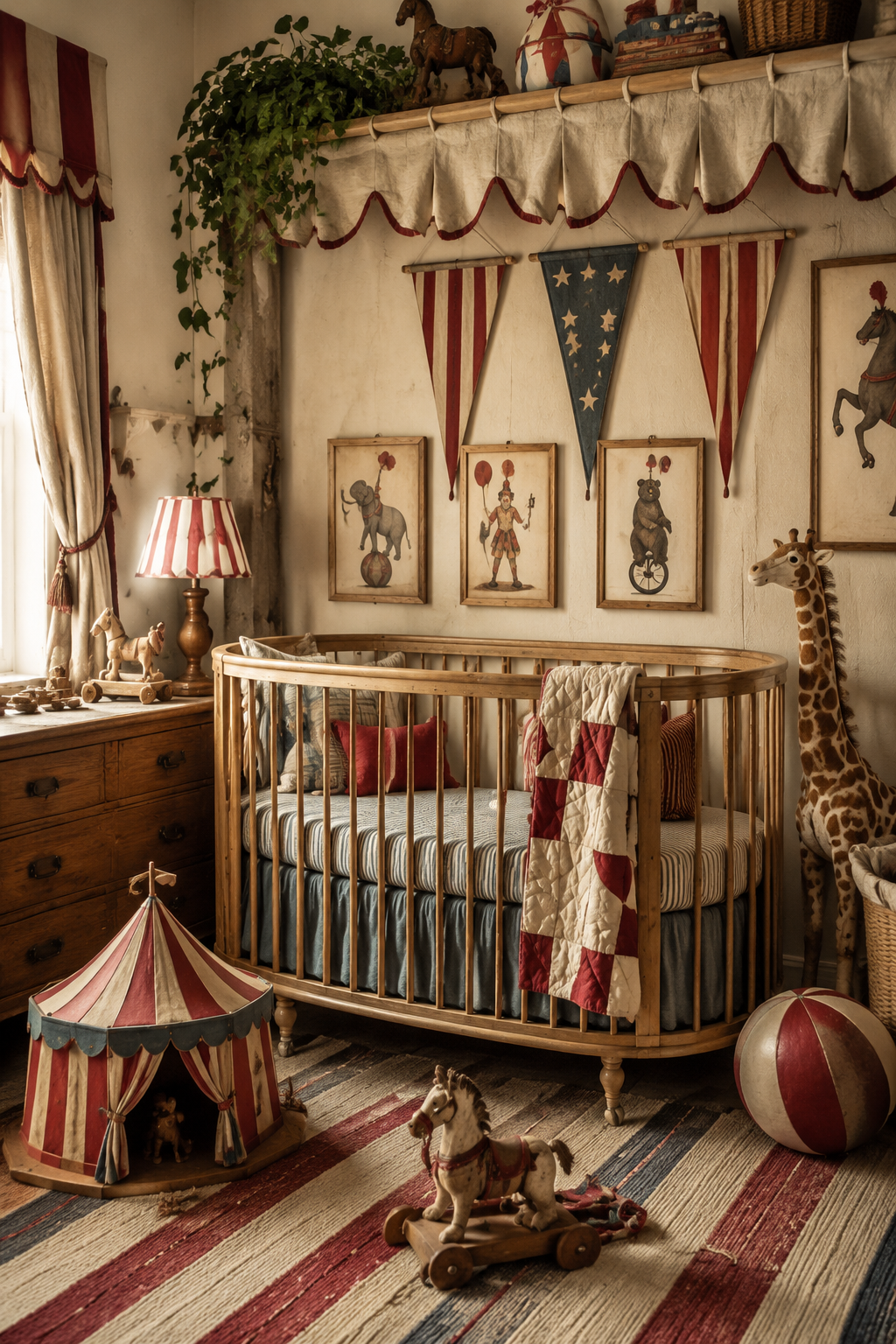
Use a warm white, pale oat, misty blue, or diluted pink across the largest surfaces, then reserve stronger colors for pieces that are easy to change. A practical ratio is roughly two-thirds quiet background, one-quarter supporting color, and a small amount of high-energy contrast. This prevents red, yellow, and blue from competing at equal volume. For a cooler scheme, borrow the layering principles in this guide to decorating with moody blue and lighten the result with cream, pale wood, and chalky red. A warmer nursery can take cues from balanced warm-neutral rooms, adding circus color through art, textiles, and storage rather than every wall.
3. Use stripes as structure rather than visual noise
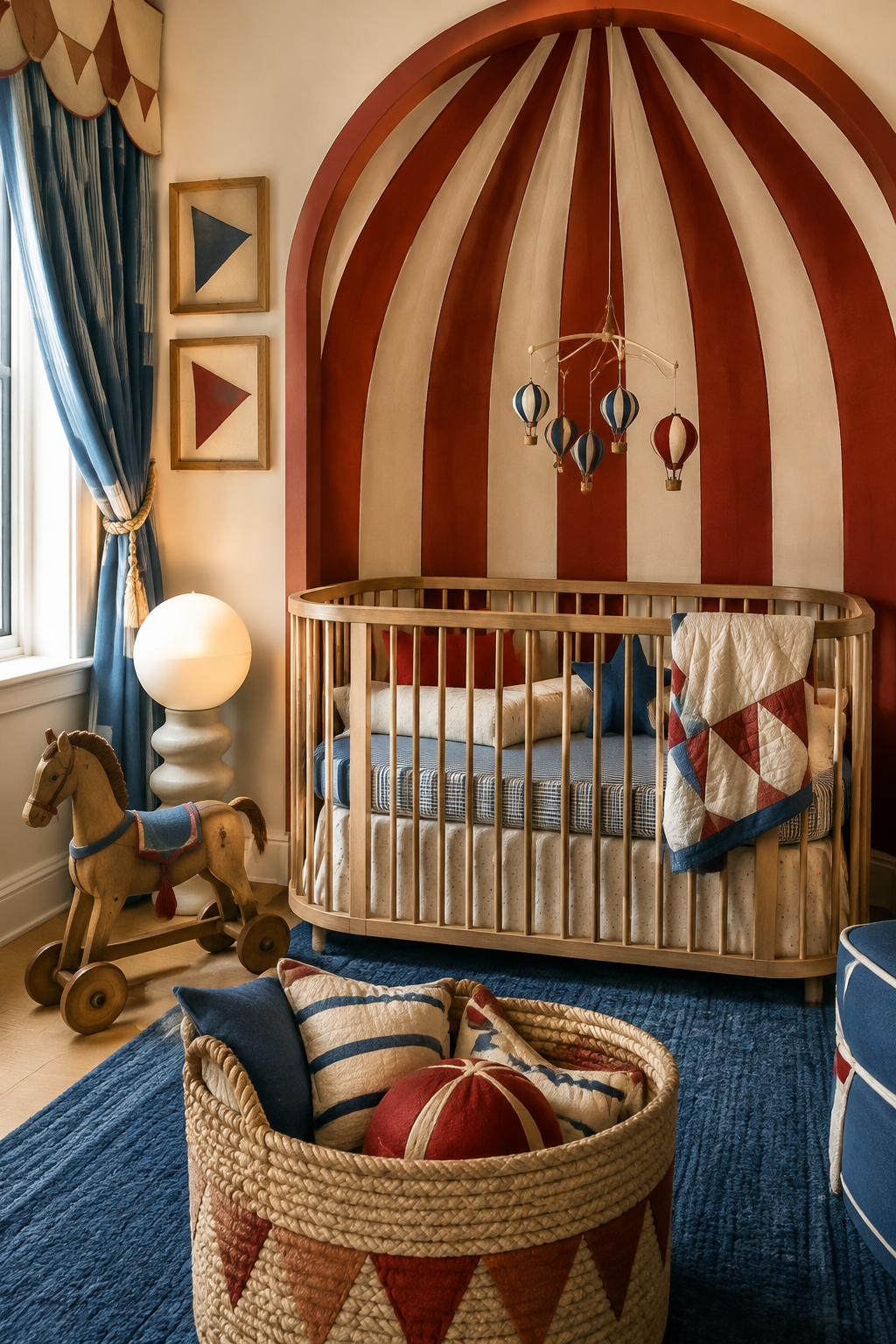
Stripes are the fastest way to imply a circus tent, but their placement matters. Choose one architectural application: a striped ceiling medallion, a painted canopy shape behind the crib, curtains with a narrow border, or a rug that defines the play area. Avoid placing large stripes on the ceiling, walls, curtains, and floor at once. Varying the scale is safer than repeating the same bold stripe everywhere; pair one broad pattern with a much finer ticking stripe. Renters can create a removable painted-tent effect with peel-and-stick arches or a fabric canopy secured according to its instructions and positioned well beyond the crib.
4. Pick a single focal point for the room
A circus nursery needs one moment that explains the idea immediately. It might be a canopy-shaped wall treatment, a gallery of three vintage-inspired prints, a scalloped headboard for a toddler bed, or a pendant shade with a subtle tent silhouette. Keep surrounding surfaces simpler so the feature remains legible from the doorway. This is especially valuable in compact rooms, where too many small statements can make the perimeter feel crowded. The space-saving lessons in these cozy small bedroom ideas translate well to nurseries: preserve a clear path, use vertical storage, and allow one wall to work harder than the others.
5. Mix nostalgic motifs with modern shapes
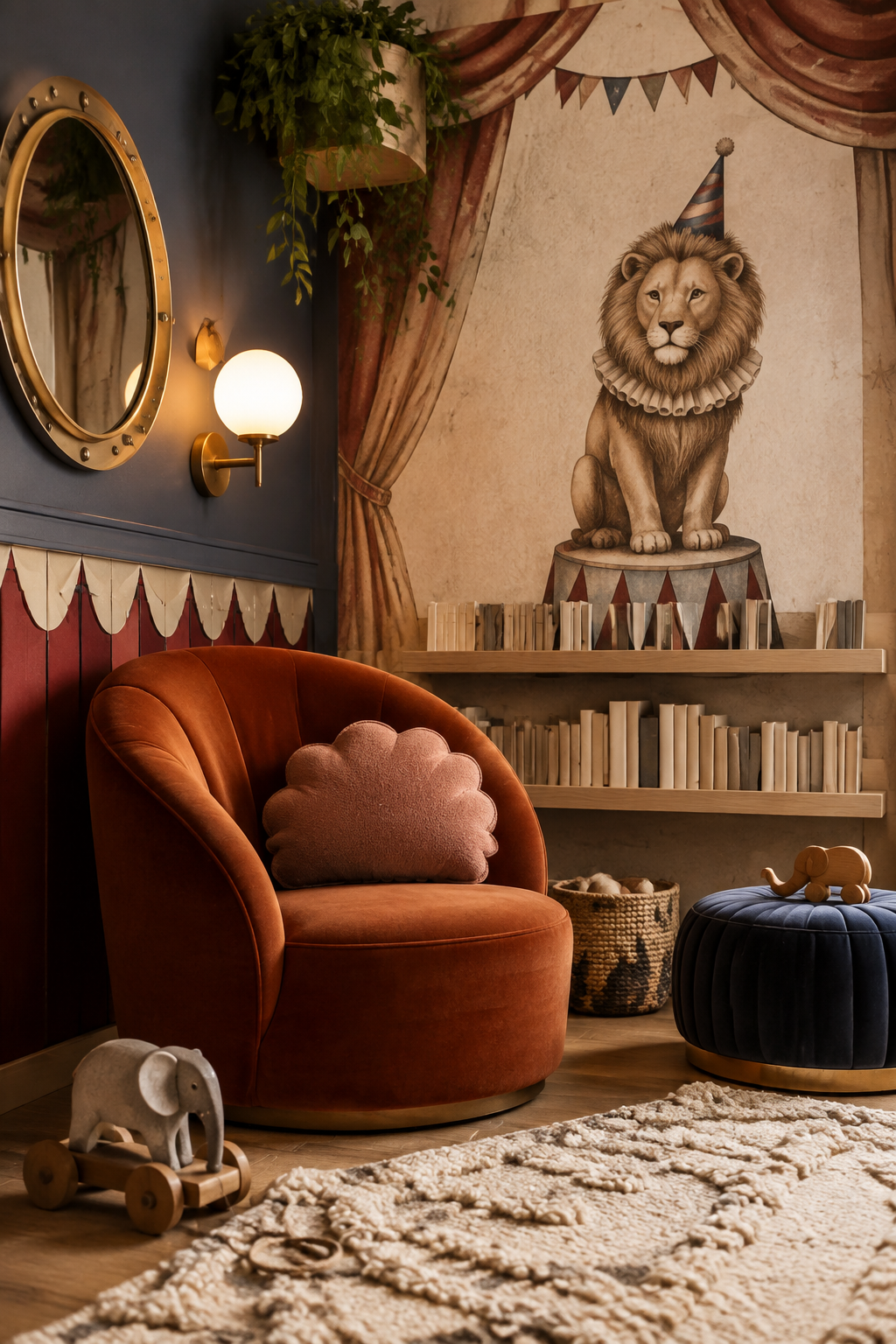
The room will feel more enduring if literal circus imagery is balanced by abstract references. Pair one lion, horse, seal, or elephant illustration with round mirrors, globe lighting, scalloped trim, bunting shapes, and curved furniture. These forms carry the sense of performance and movement without repeating cartoon characters. Keep animal portrayals gentle rather than fierce, and avoid imagery that romanticizes unsafe treatment of animals. For a softer nostalgic layer, the muted rose, aged brass, and collected artwork in these vintage pink decor ideas can inform a nursery palette without making the room feel sugary or costume-like.
6. Layer patterns while giving the eye somewhere to rest
Limit the room to three pattern families: one stripe, one small-scale print, and one organic or figurative motif. Connect them through shared colors, then place solid fabric between patterned pieces. For example, a broad striped rug can sit beneath plain crib linens, while a tiny star print appears on a cushion in the reading chair and an animal motif appears only in framed art. The same principle underpins successful bold color combinations: contrast works best when one element leads and the others support it. Photograph the room from the doorway before adding another pattern; the camera often reveals competition that feels less obvious while decorating.
7. Make storage part of the circus composition
Open storage can support the theme when its contents are edited. Use matching baskets, rounded wall pegs, or painted crates in the room palette, and group toys by visual weight rather than displaying everything. A low shelf can become the base of a reading corner, while closed drawers absorb diapers, spare bedding, and brightly packaged supplies. Keep climbing risks in mind by anchoring suitable furniture according to manufacturer guidance and avoiding heavy objects overhead. Decorative boxes shaped like drums may be charming, but ordinary lidded baskets often age better and keep the room from becoming too literal.
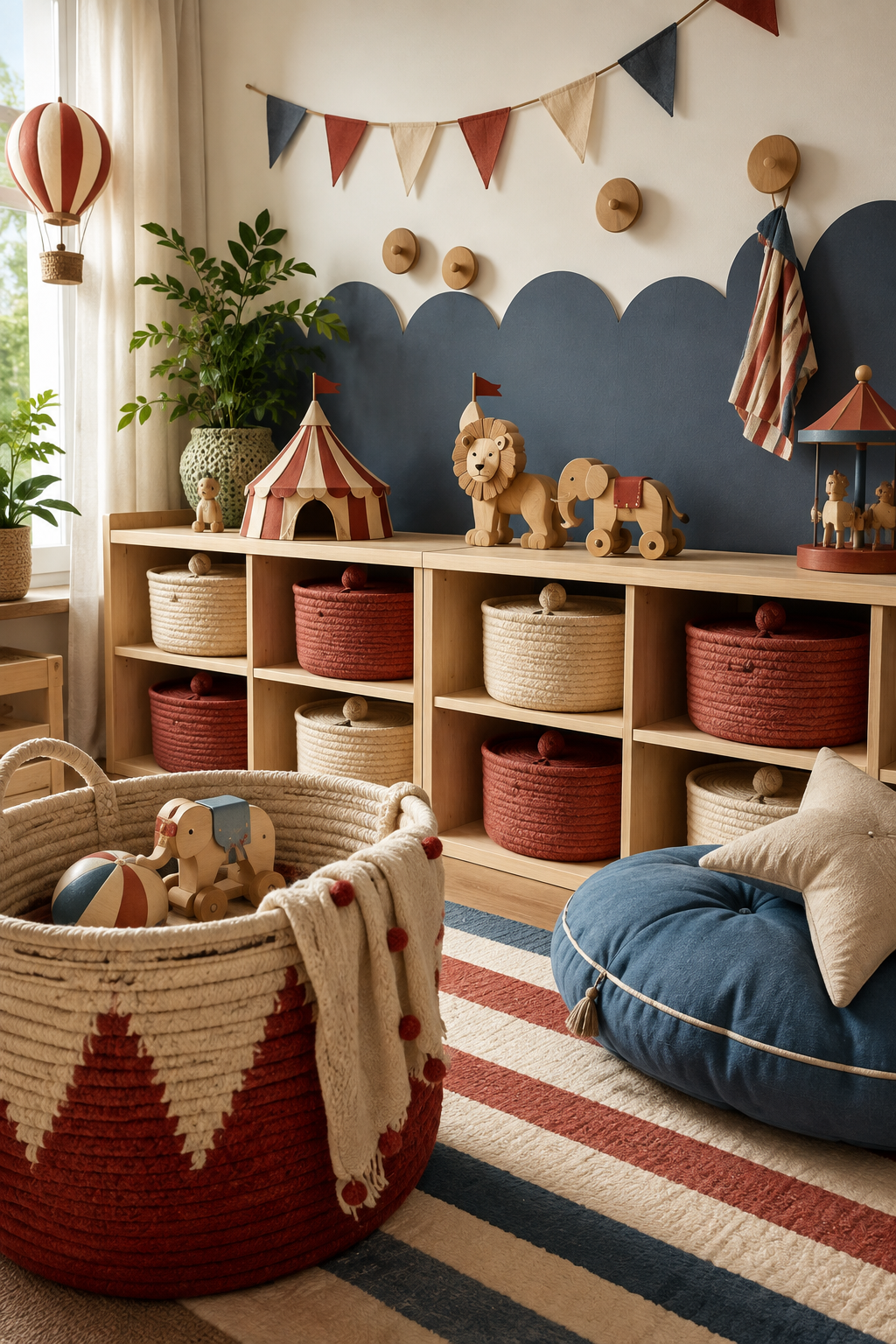
8. Design for sleep, safety, and an easy future update
Keep the crib zone quieter than the play side of the room. Follow current product instructions and applicable safe-sleep guidance, leaving the sleep surface free of decorative pillows, loose blankets, toys, and canopies. Secure furniture and wall decor appropriately, manage cords, and place plants or breakable accessories beyond a child’s reach. Because needs change quickly, concentrate the strongest circus notes in removable art, rugs, curtains, baskets, and paint details. A restrained background also makes later changes inexpensive: exchange animal art for maps, replace bunting with graphic prints, or evolve the palette while retaining the same furniture.
Final thoughts
Circus nursery decor works best when it captures the rhythm and wonder of the theme rather than reproducing every familiar symbol. A calm base, a disciplined palette, one confident focal point, and a few repeated shapes are enough to create a room with personality.
Treat safety and flexibility as part of the design. When the boldest details are removable and the essential furniture remains simple, the nursery can change gracefully as a baby becomes a toddler with preferences of their own.
Frequently asked questions
How many circus colors should a nursery use?
Choose three or four main colors plus a neutral. Let one color lead, use one or two as support, and reserve the brightest shade for small accents. This creates energy without making every surface compete.
Can circus nursery decor work in a small room?
Yes. Use one focal wall, a compact crib, vertical storage, and a single medium-scale pattern. Keeping the floor path clear and reducing small decorative objects will make the room feel more spacious.
How can renters create a circus theme without painting?
Try removable wall arches, framed original art, striped curtains, a patterned rug, scalloped baskets, and colorful lampshades. Verify that removable products are suitable for the wall finish and install all items safely.
Does every circus nursery need red and yellow?
No. Dusty blue and coral, sage and butter yellow, or plum and blush can communicate the theme through stripes, curves, and vintage-inspired artwork without using a traditional primary palette.
How do you keep themed nursery decor from looking dated?
Keep the crib, dresser, and main storage visually simple. Put the theme into replaceable layers such as art, textiles, baskets, and small lighting accents, then update those pieces as the child grows.