
The Psychology of Aubergine
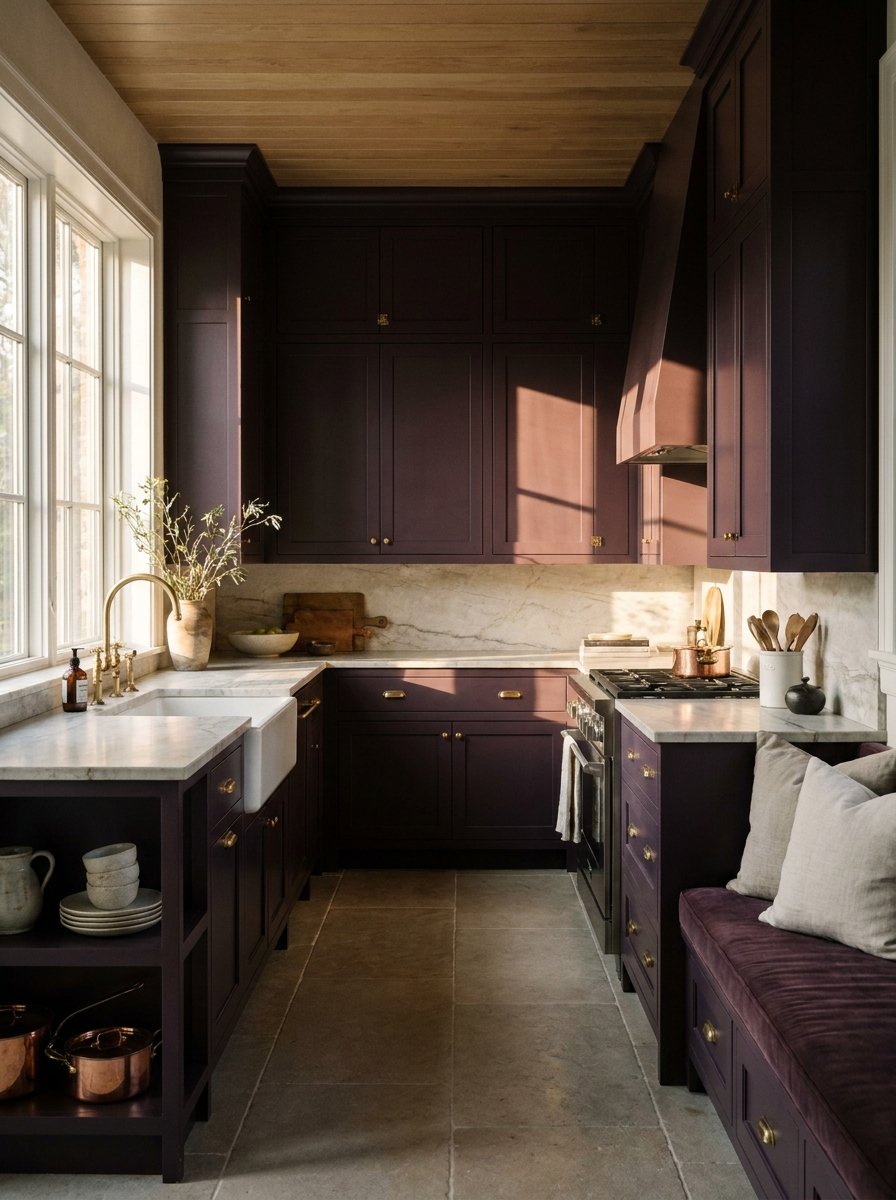
Aubergine is a complex color that sits at the intersection of luxury, mystery, and comfort. Unlike flat blacks or grays, this deep plum shade has red and blue undertones that respond dynamically to natural light. In the ‘My Room My Rules’ mindset, choosing aubergine is an act of rebellion against ‘safe’ design. It evokes a sense of regality and high-end sophistication while remaining grounded and earthy. Because it is a color found in nature, it creates a ‘cocoon’ effect in the kitchen, making the space feel intimate and curated rather than sterile and industrial.
Matte vs. High Gloss Finishes
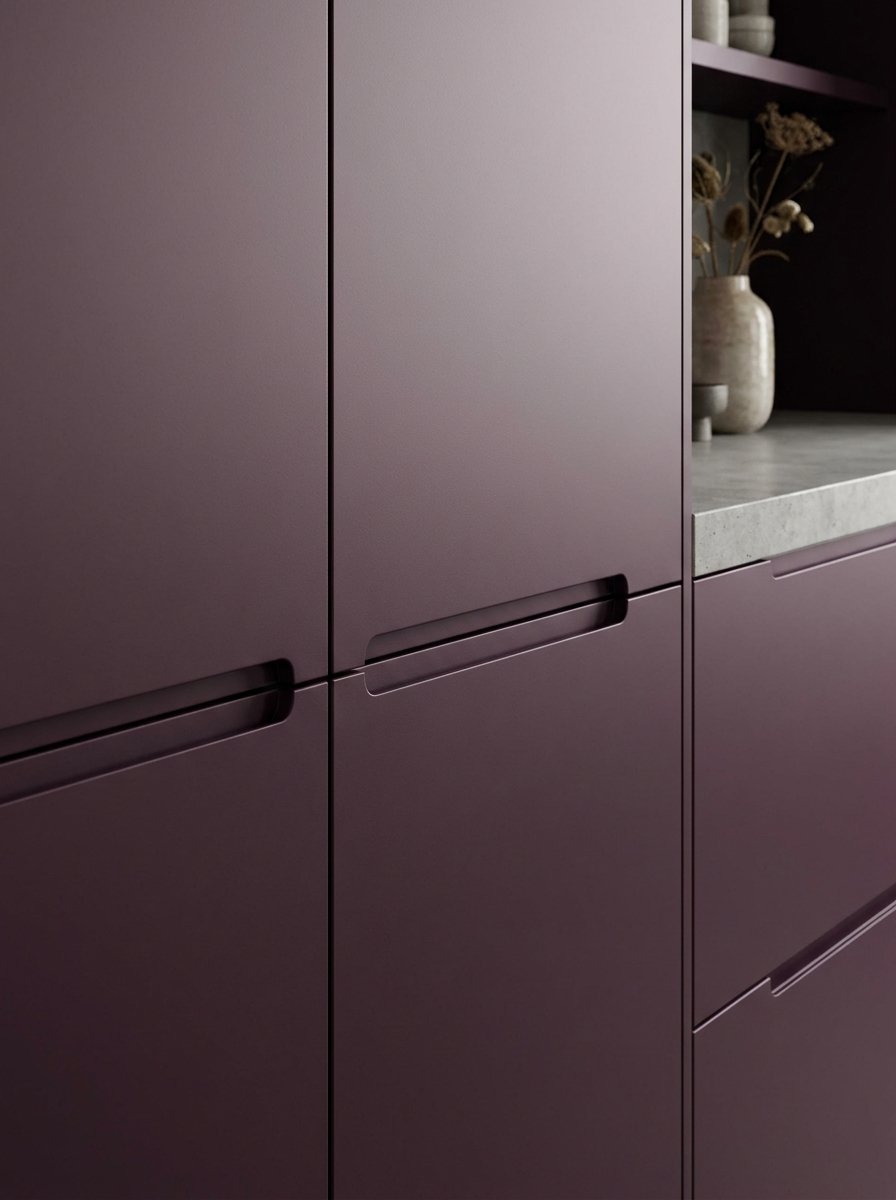
The finish of your aubergine cabinets completely alters the room’s energy. A matte finish is the current Pinterest favorite, offering a velvety, contemporary look that absorbs light and emphasizes the depth of the pigment. It feels organic and tactile. Conversely, a high-gloss aubergine cabinet leans into ‘glam’ territory, reflecting light and making a bold, avant-garde statement. For those following the ‘My Room My Rules’ ethos, mixing a matte aubergine island with high-gloss perimeter cabinets can create a stunning textural contrast that keeps the eye moving and the design feeling bespoke.
The Midas Touch: Brass and Gold Hardware
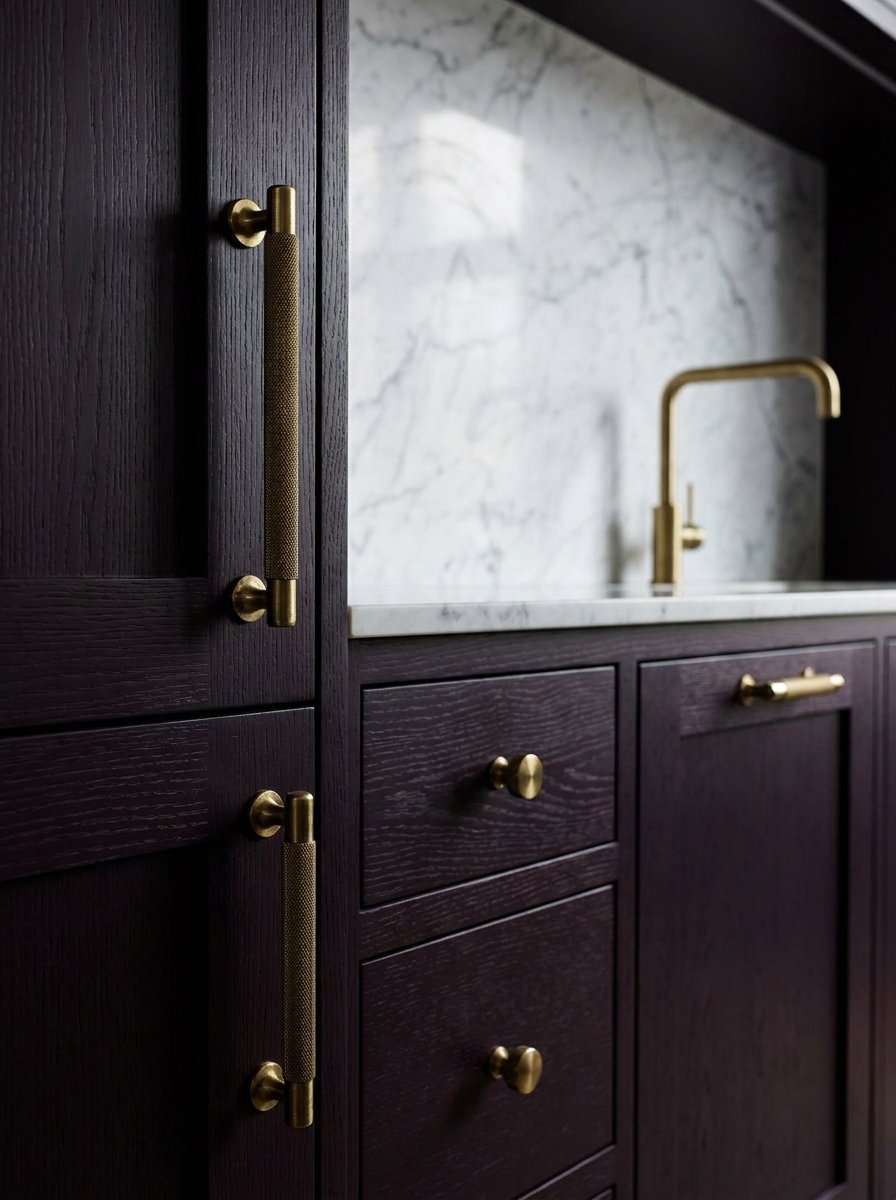
To truly make aubergine cabinets pop, hardware selection is critical. Nothing complements the warm undertones of plum quite like unlacquered brass or brushed gold. The yellow tones in the metal act as a direct contrast to the purple spectrum, creating a visual harmony that feels expensive and intentional. For a more modern, ‘edgy’ look, consider oversized knurled brass pulls. If you prefer a vintage aesthetic, antique gold knobs add a layer of history. This combination is a staple of the ‘My Room My Rules’ aesthetic, blending classic materials with daring color choices.
Pairing with Calacatta Viola Marble
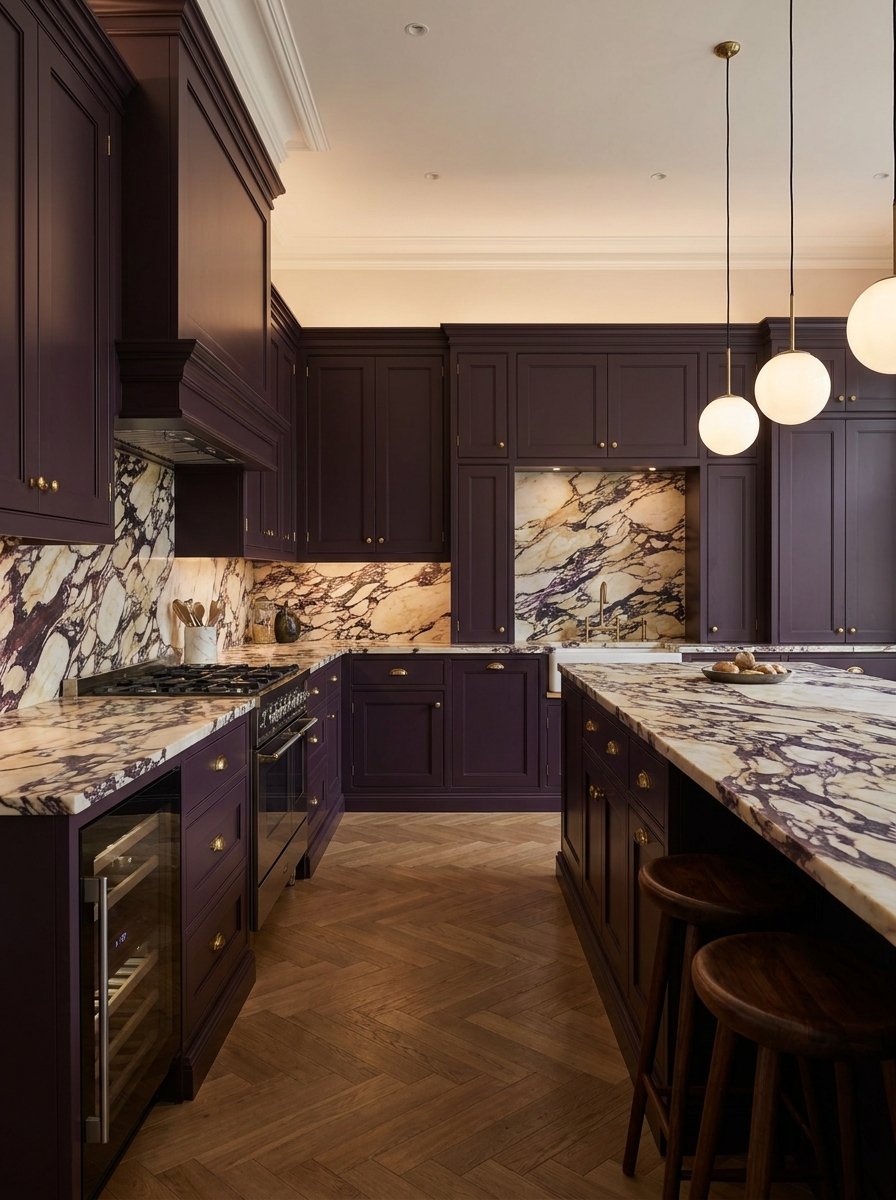
If there is one stone that was born to live alongside aubergine cabinets, it is Calacatta Viola marble. Known for its dramatic burgundy and purple veining against a creamy white background, this stone ties the entire room together. Using Viola marble for countertops or a full-height backsplash creates a seamless transition from the cabinetry to the rest of the space. The organic swirls of the marble mimic the richness of the aubergine paint, resulting in a kitchen that feels like a piece of fine art. It’s a high-stakes design choice that pays off in pure elegance.
Lighting Strategies for Dark Palettes
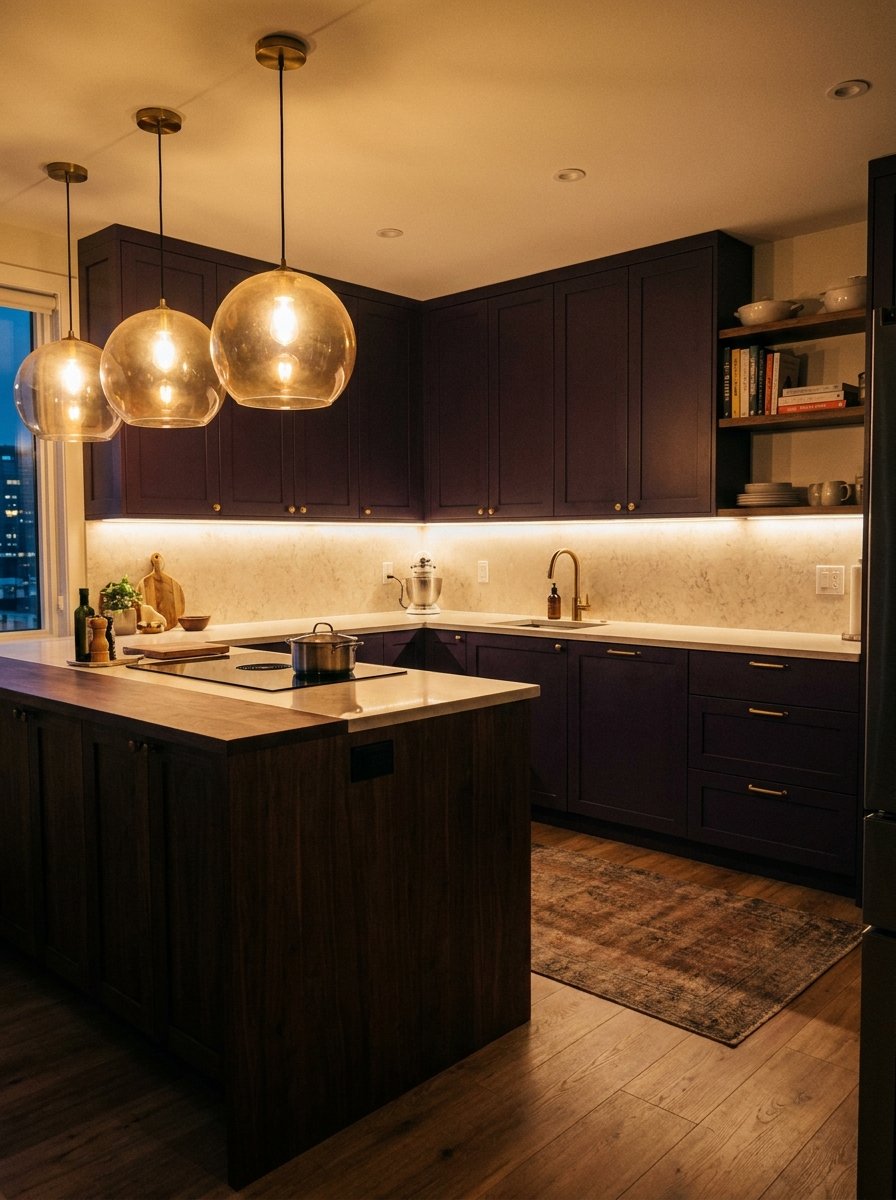
One fear homeowners have with dark cabinets is making the kitchen feel like a cave. The key is layered lighting. In an aubergine kitchen, you need a mix of task, ambient, and accent lighting. Under-cabinet LED strips are essential to illuminate the workspace and show off the cabinet’s true color. Consider oversized pendant lights with warm globes to cast an inviting glow. By focusing light on specific textures—like a tiled backsplash or a wooden island—you ensure the aubergine serves as a sophisticated backdrop rather than an overwhelming shadow, maintaining a bright and functional environment.
The Impact of Small Space Sophistication
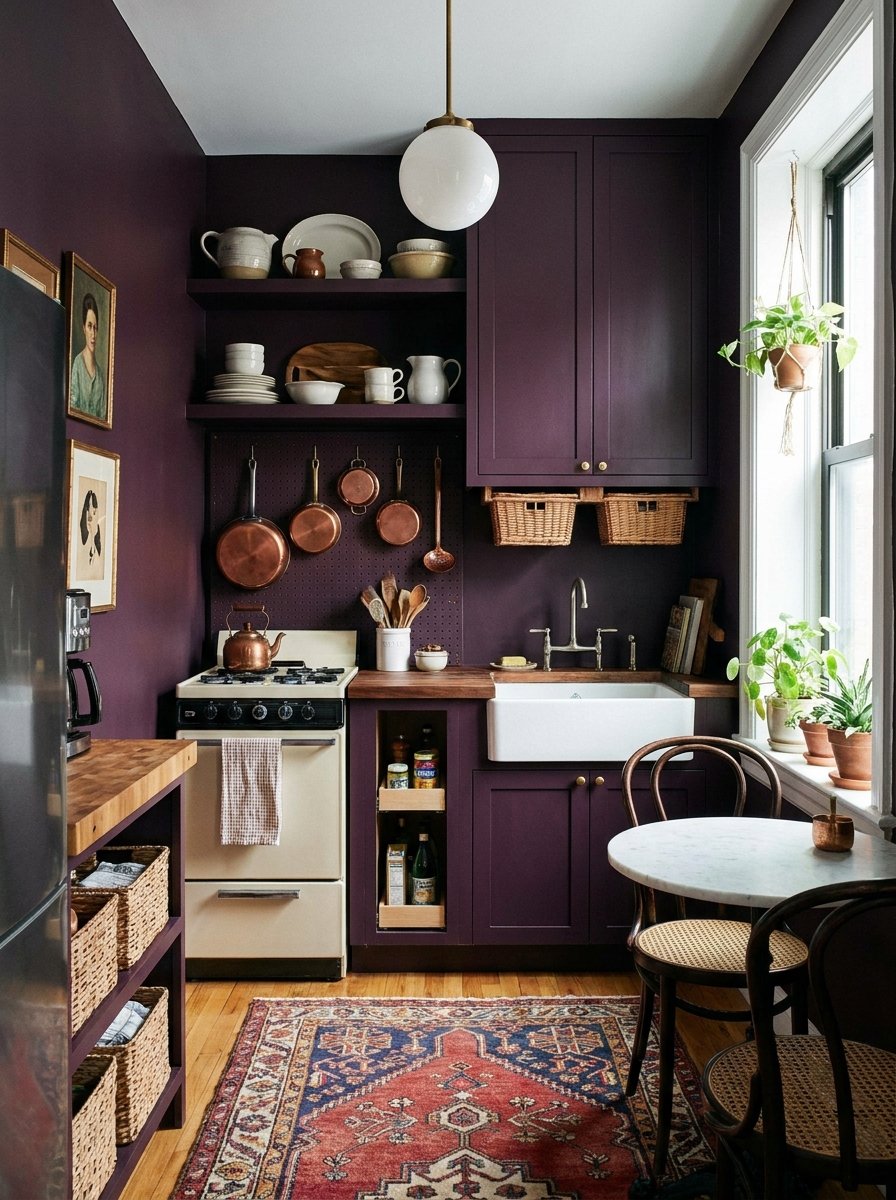
There is a myth that dark colors make small rooms look smaller. In reality, deep colors like aubergine can blur the edges of a room, creating an illusion of infinite depth. In a compact kitchen, painting everything—cabinets, trim, and even walls—in a monochrome aubergine palette can make the space feel expansive and intentional. This ‘color drenching’ technique is a hallmark of the ‘My Room My Rules’ style. By eliminating visual breaks, the eye travels smoothly across the space, making a small kitchen feel like a jewel box of design.
Biophilic Blends: Wood and Greens
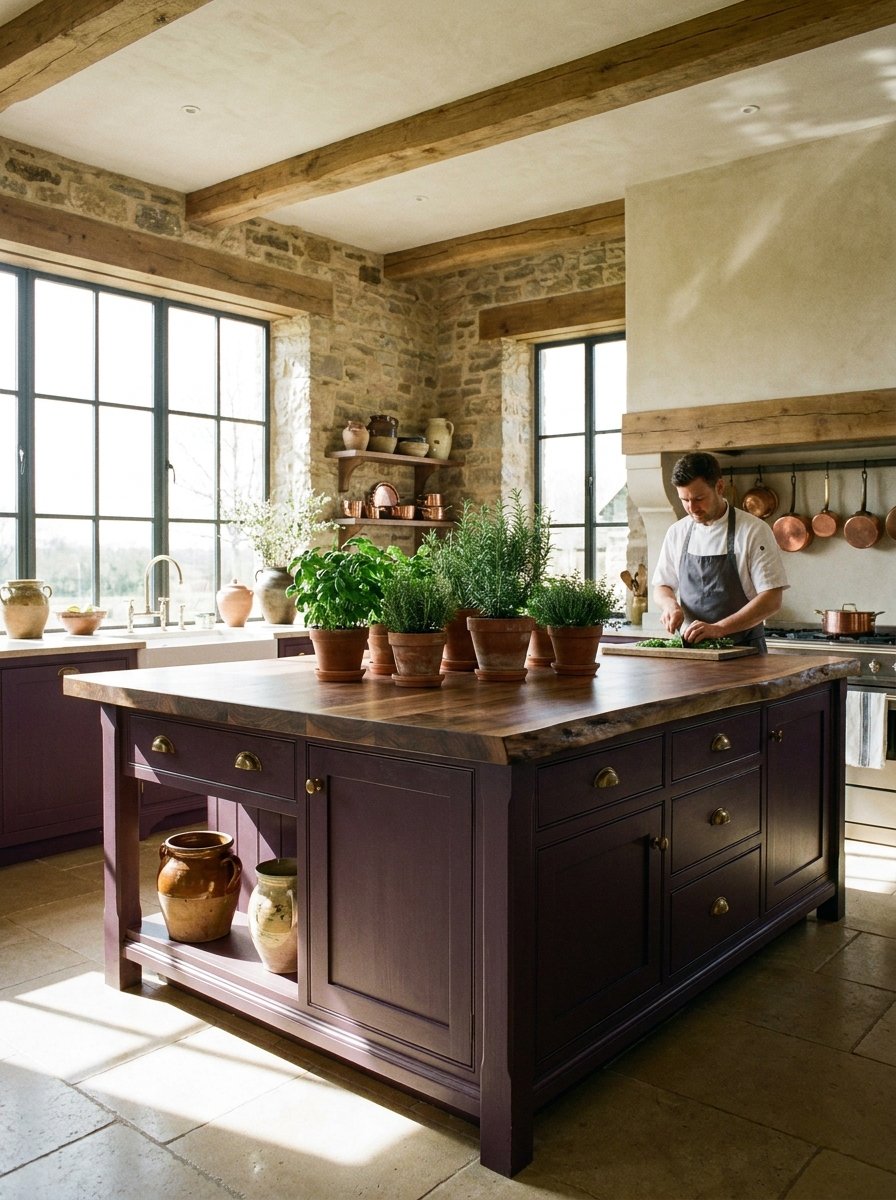
To prevent an aubergine kitchen from feeling too ‘cold’ or overly formal, incorporate biophilic elements. Light oak flooring or walnut open shelving provides a natural warmth that grounds the purple tones. Adding indoor plants—think trailing Pothos or a large Fiddle Leaf Fig—introduces a vibrant green that sits beautifully against the plum. This organic contrast is essential for a lived-in feel. The ‘My Room My Rules’ approach encourages this mix of the ‘man-made’ luxury of deep paint with the raw, imperfect beauty of natural wood and foliage.
The Statement Island
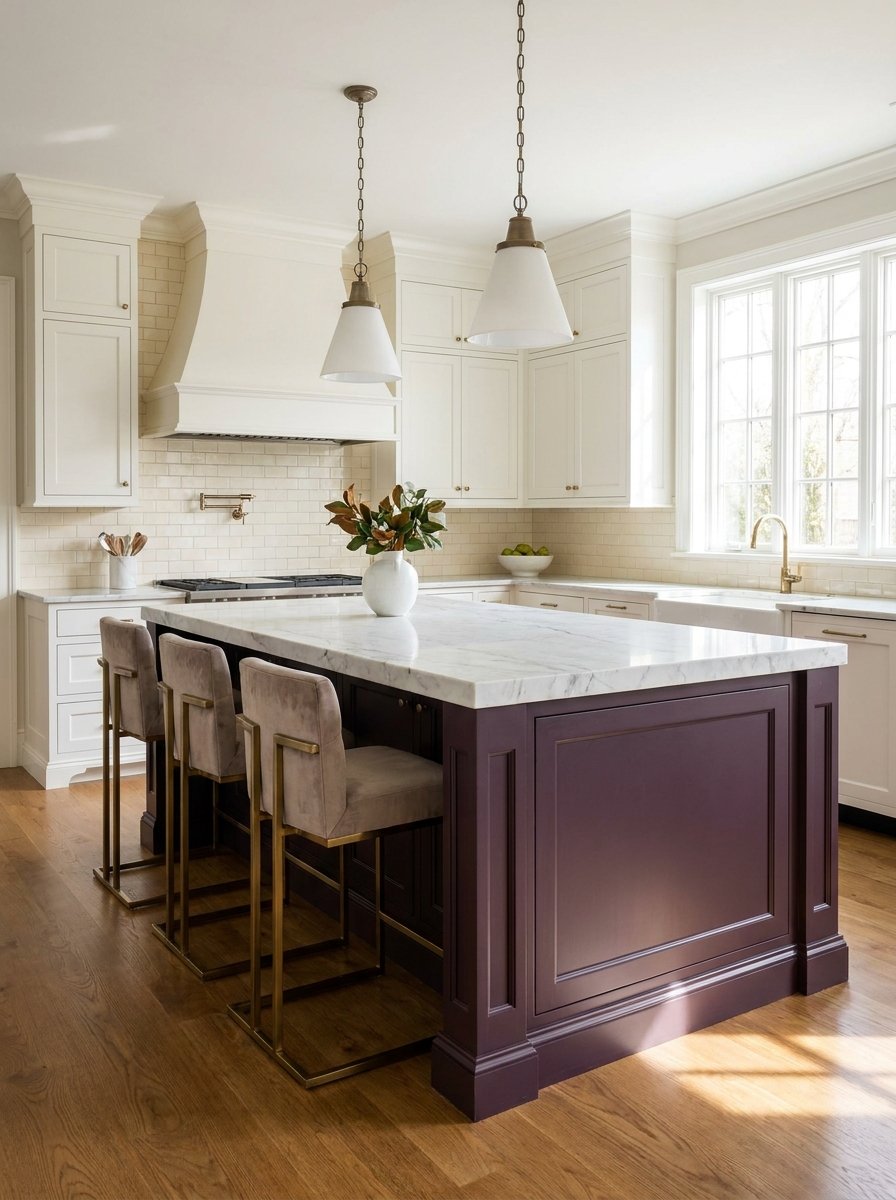
If you aren’t ready to commit to a full aubergine kitchen, the statement island is your gateway. Painting just the center island in a rich plum while keeping the perimeter cabinets in a soft taupe or mushroom creates a sophisticated ‘tuxedo’ effect. This focal point draws the eye and allows you to experiment with the trend without a total overhaul. It’s the perfect way to test the ‘My Room My Rules’ waters, giving you a pop of personality that can be accented with aubergine bar stools or pendant lights.
Backsplash Brilliance
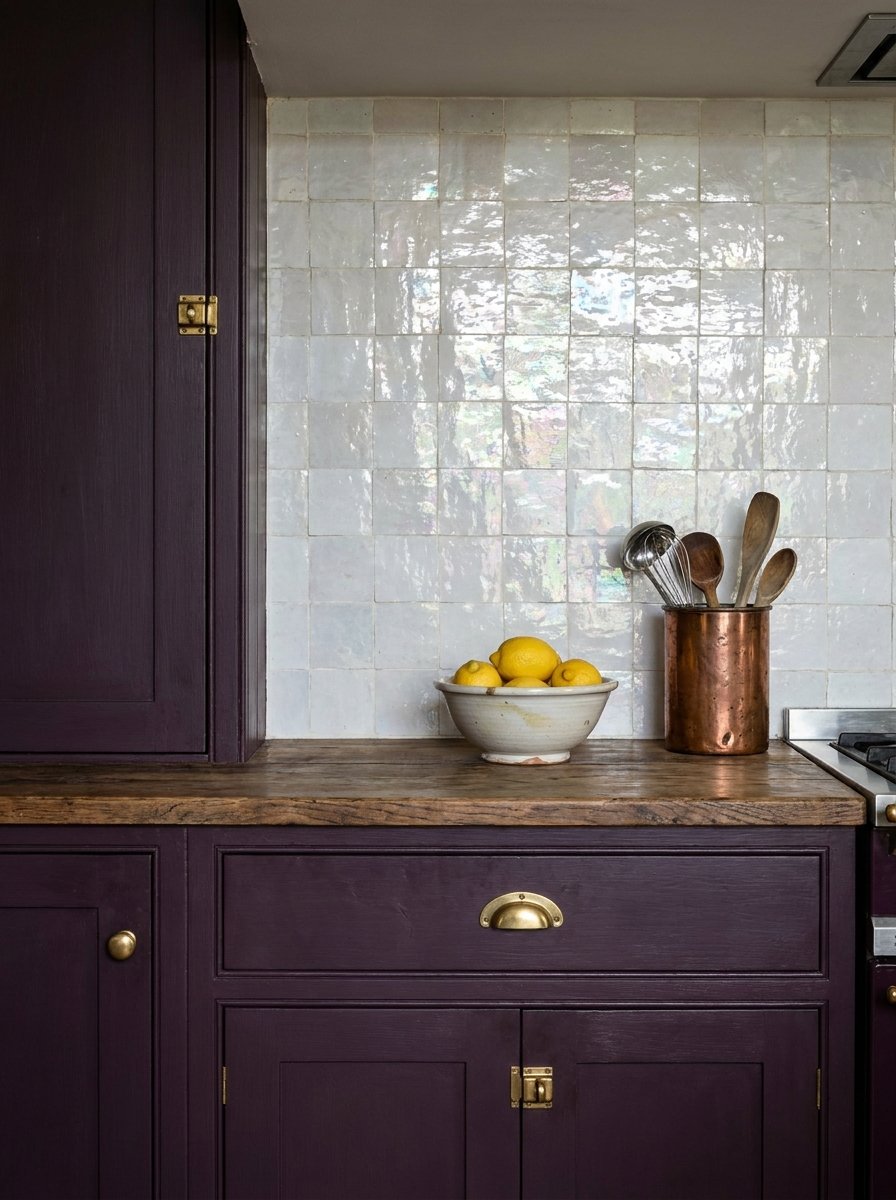
The backsplash is the bridge between your cabinets and your countertops. For aubergine cabinets, Zellige tiles in a soft pearlescent white or a tonal plum offer a handcrafted, shimmering quality that reflects light beautifully. The irregular surface of Zellige tiles adds a rustic charm that balances the sharpness of the aubergine. If you want something bolder, a mirrored backsplash or a copper sheet can add a vintage, speakeasy vibe to the kitchen, leaning into the darker, more mysterious side of the aubergine trend that Pinterest users are currently obsessed with.
Future-Proofing the Trend
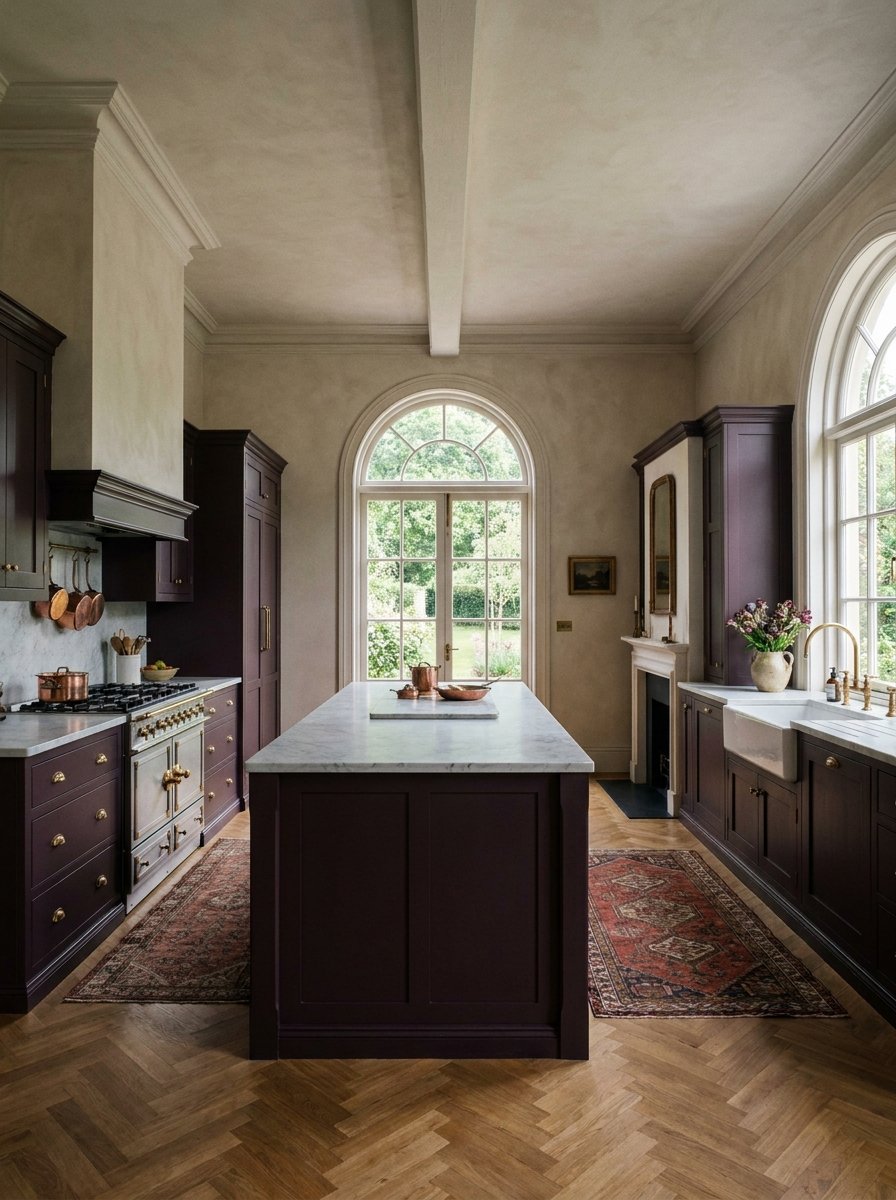
Is aubergine a passing fad? Design experts suggest otherwise. Because it functions as a ‘new neutral,’ aubergine has more staying power than brighter, neon-adjacent colors. It’s a classic shade that has been used in European estates for centuries, now reimagined for the modern home. To future-proof the look, stick to classic cabinet silhouettes like Shaker or flat-panel and use high-quality paint. By following the ‘My Room My Rules’ mantra, you aren’t chasing a trend—you are building a space that reflects your unique taste, which never goes out of style.