
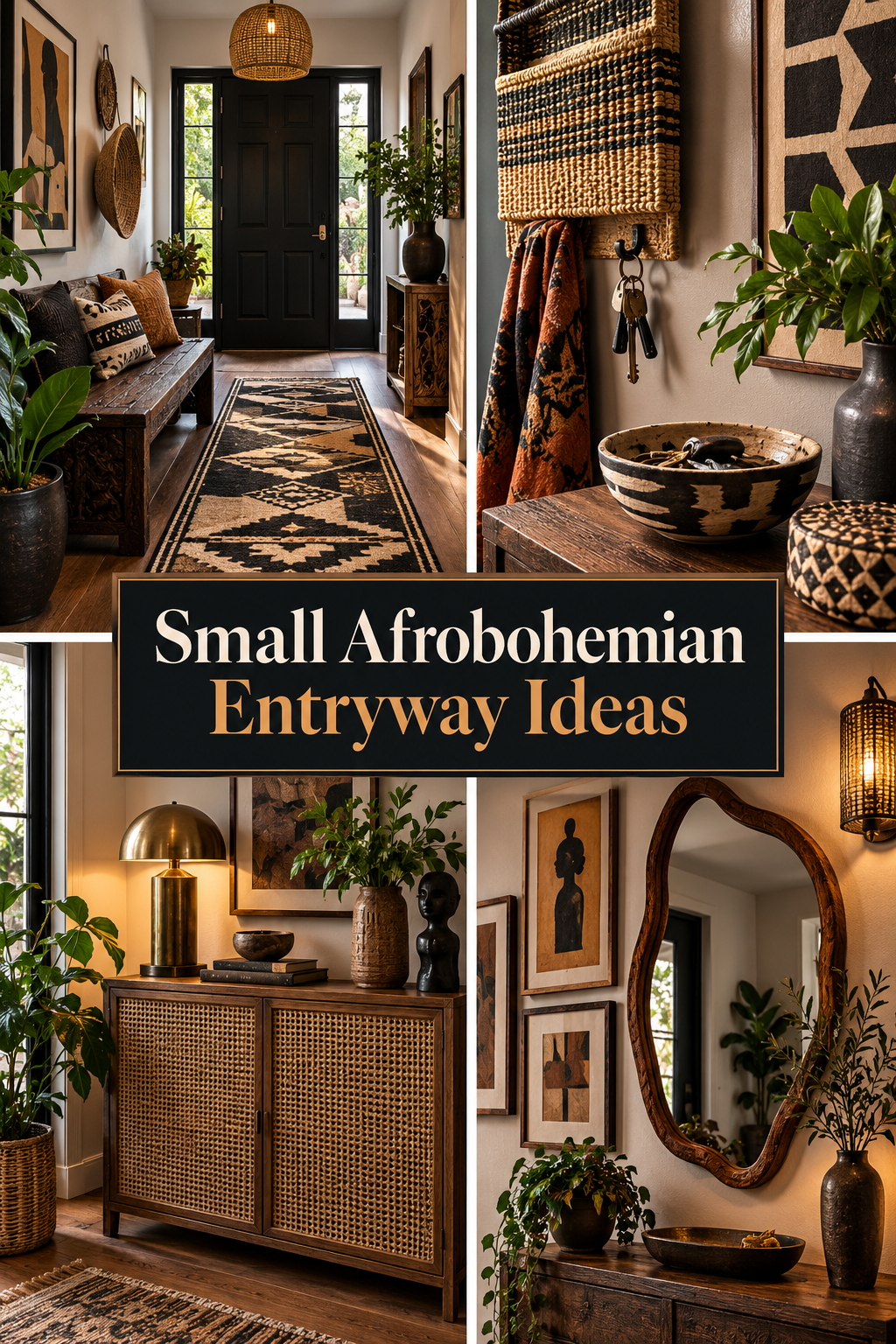
The most effective small Afrobohemian entryway decor ideas solve two needs at once: they give everyday belongings a clear destination while creating a warm, expressive welcome. The look can feel layered and collected without becoming crowded when storage follows the room’s natural circulation and every decorative element earns its place.
Start with the objects that actually pass through the doorway—shoes, keys, bags, mail and seasonal accessories—then build a compact system around them. Natural fibers, carved wood, graphic textiles, greenery and grounded color can bring character after the practical zones are established.
This article was prepared with AI assistance and editorial review.
Key takeaways
- Protect the walking path before adding furniture or decorative layers.
- Combine concealed storage with a small number of attractive open-access pieces.
- Use walls and doors to reduce pressure on limited floor space.
- Repeat a controlled palette so varied patterns and materials feel connected.
- Create a short reset routine that prevents the entryway from becoming a drop zone.
1. Define a Clear Entry Zone Without Blocking the Walkway
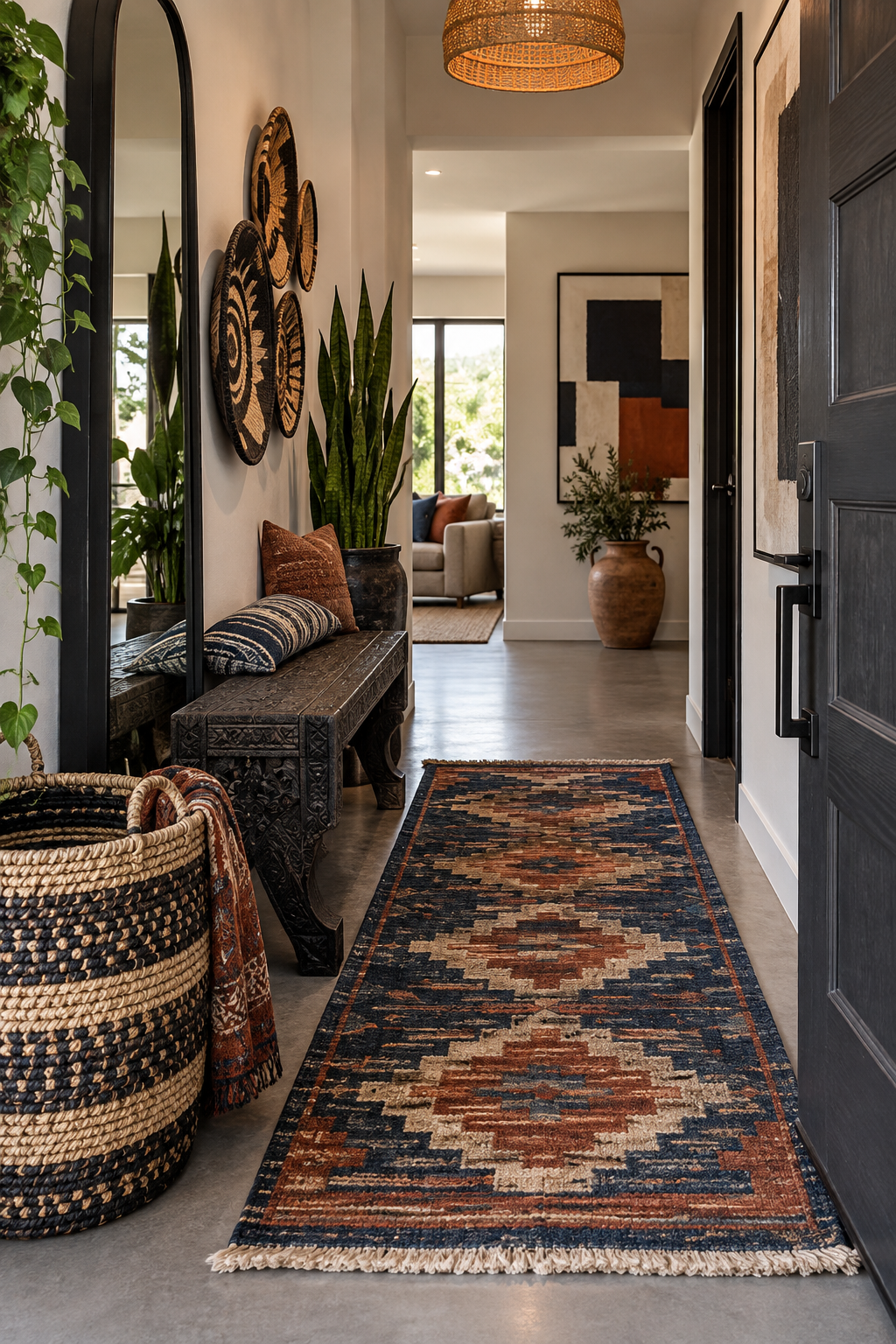
A small entryway works best when its boundary is visually clear but physically light. Begin by measuring the open path from the door to the next room, including the full swing of the door. Keep that route unobstructed and place storage against the least disruptive wall. In a studio or open-plan apartment, a narrow runner, shallow wall color block or pendant light can establish the entry zone without adding a bulky divider.
Arrange the room around one dominant vertical element and one low horizontal element. A tall mirror or grouped wall art can draw the eye upward, while a slim bench or compact shoe unit grounds the composition. This simple framework supports the same circulation-first thinking found in effective small-space layout principles and prevents decorative details from spreading beyond the entry.
2. Use Slim Closed Storage to Quiet the Visual Clutter
Open baskets are convenient, but a room filled entirely with visible storage can still look untidy. Give shoes, pet supplies, reusable bags and backup accessories a concealed home in a shallow cabinet, lidded trunk or bench with internal storage. Choose the deepest piece that fits without intruding into the circulation route, and confirm that doors or drawers can open while someone stands nearby.
Closed storage does not need to look generic. A wood front, woven cane panel or restrained geometric detail can contribute to the Afrobohemian character while keeping practical items out of sight. Leave some breathing room above the unit rather than stacking decor across every inch. One bowl, one sculptural object and a small lamp usually create a stronger focal point than a crowded row of accessories.
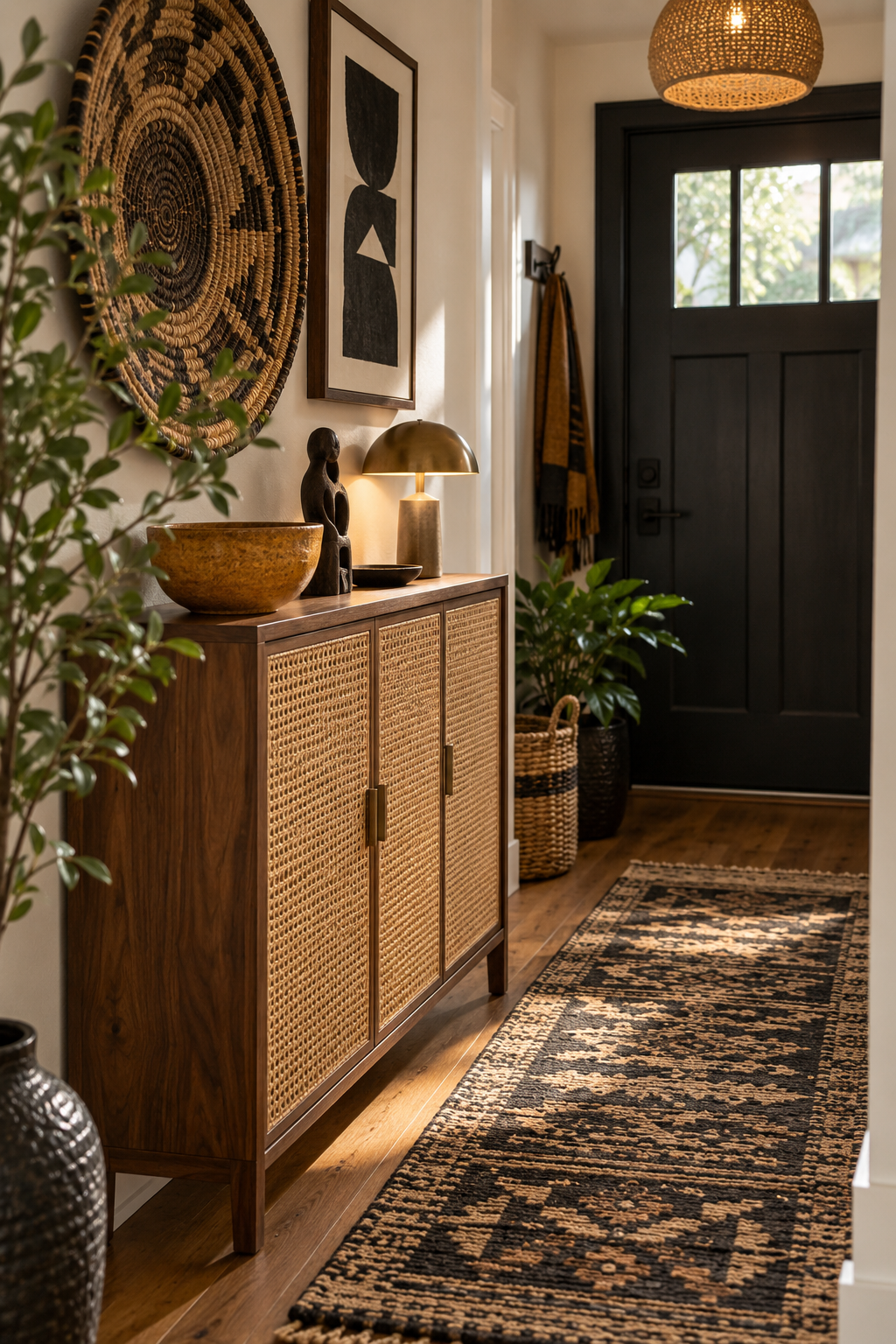
3. Move Bags, Hats and Keys Onto the Wall
Vertical storage frees the floor and keeps frequently used items visible. Install a short rail, staggered hooks or a compact peg rack where bags and jackets will not interfere with the door. Limit each hook to one active item whenever possible; overcrowded hooks quickly become a tangled second wardrobe. A small shelf above can hold a basket for sunglasses, dog leads or other lightweight essentials.
Treat the wall arrangement as part storage and part composition. Mix functional hooks with one framed textile, a carved decorative form or a tightly edited cluster of woven pieces. Vary the heights while leaving negative space around the group. If drilling is restricted, use an over-door organizer inside a closet or removable hardware rated for the actual weight it must carry.
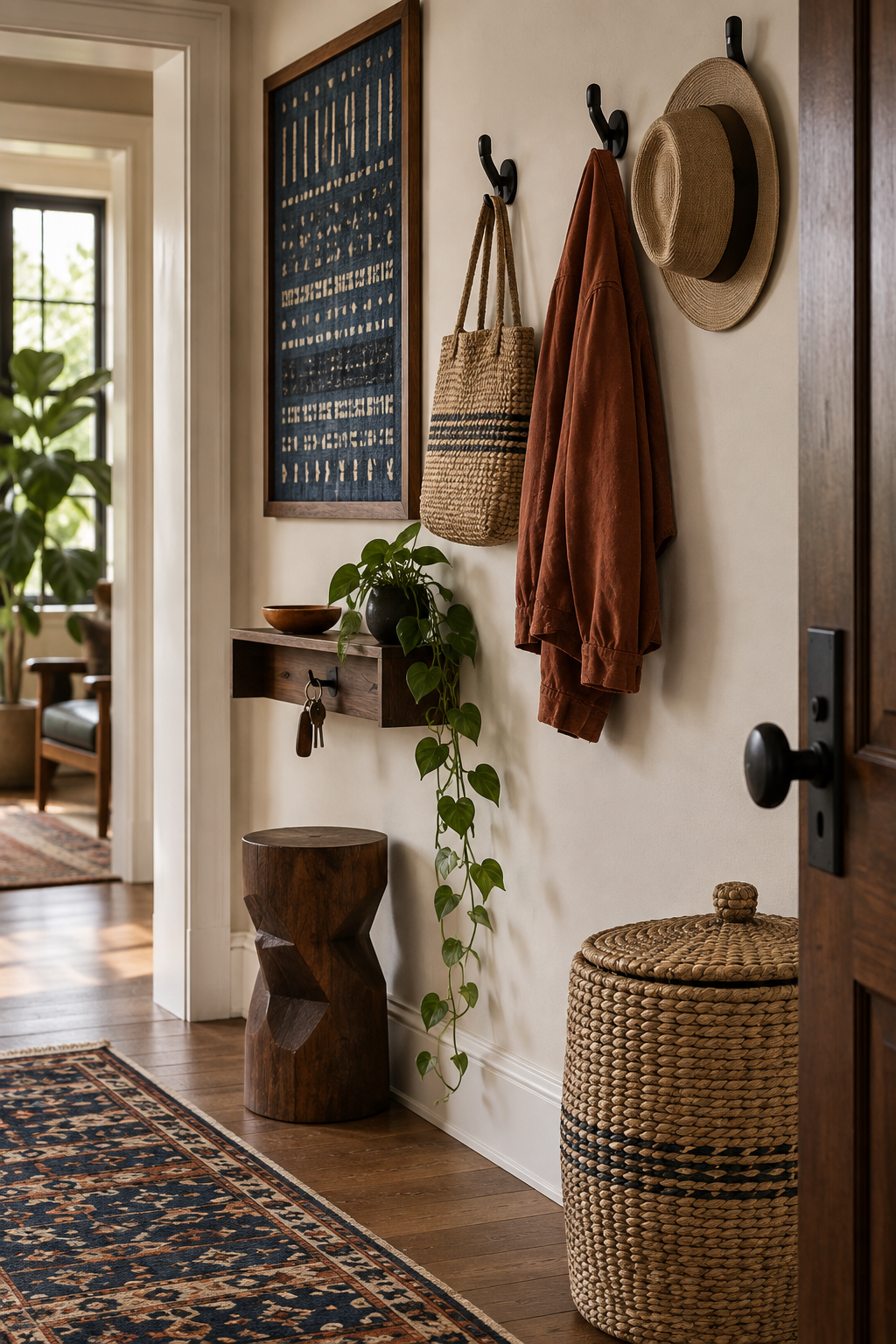
4. Build a Small Landing Strip for Everyday Essentials
Keys, mail and loose change create clutter when they have no obvious destination. Establish a landing strip close to the entrance using a slim console, floating ledge or wall-mounted box. Divide the surface into simple actions: a bowl for keys, a vertical holder for incoming paper and a small tray for items that need to leave the house.
Keep the system compact enough that it cannot become long-term storage. Process paper regularly, return stray objects to their rooms and leave part of the surface deliberately empty. This blank area is functional breathing room, not wasted space. A handcrafted ceramic dish or small woven container can introduce color and texture without disguising the landing strip’s practical purpose.
5. Add Seating That Also Controls Shoe Clutter
A place to sit makes a small entry more comfortable, especially when shoes are removed at the door. Choose a narrow bench, sturdy stool or low storage trunk that can tuck closely against the wall. Open space beneath a bench can hold only the shoes currently in rotation; the rest should live behind a closed door or elsewhere in the home.
Soften the seat with one durable cushion in mud cloth-inspired geometry, indigo, rust or ochre. Avoid piling several loose pillows into a tight passage. A washable runner placed in front of the bench catches grit, adds pattern and visually connects the seating zone to the doorway. Use a rug pad so the textile remains secure on smooth flooring.
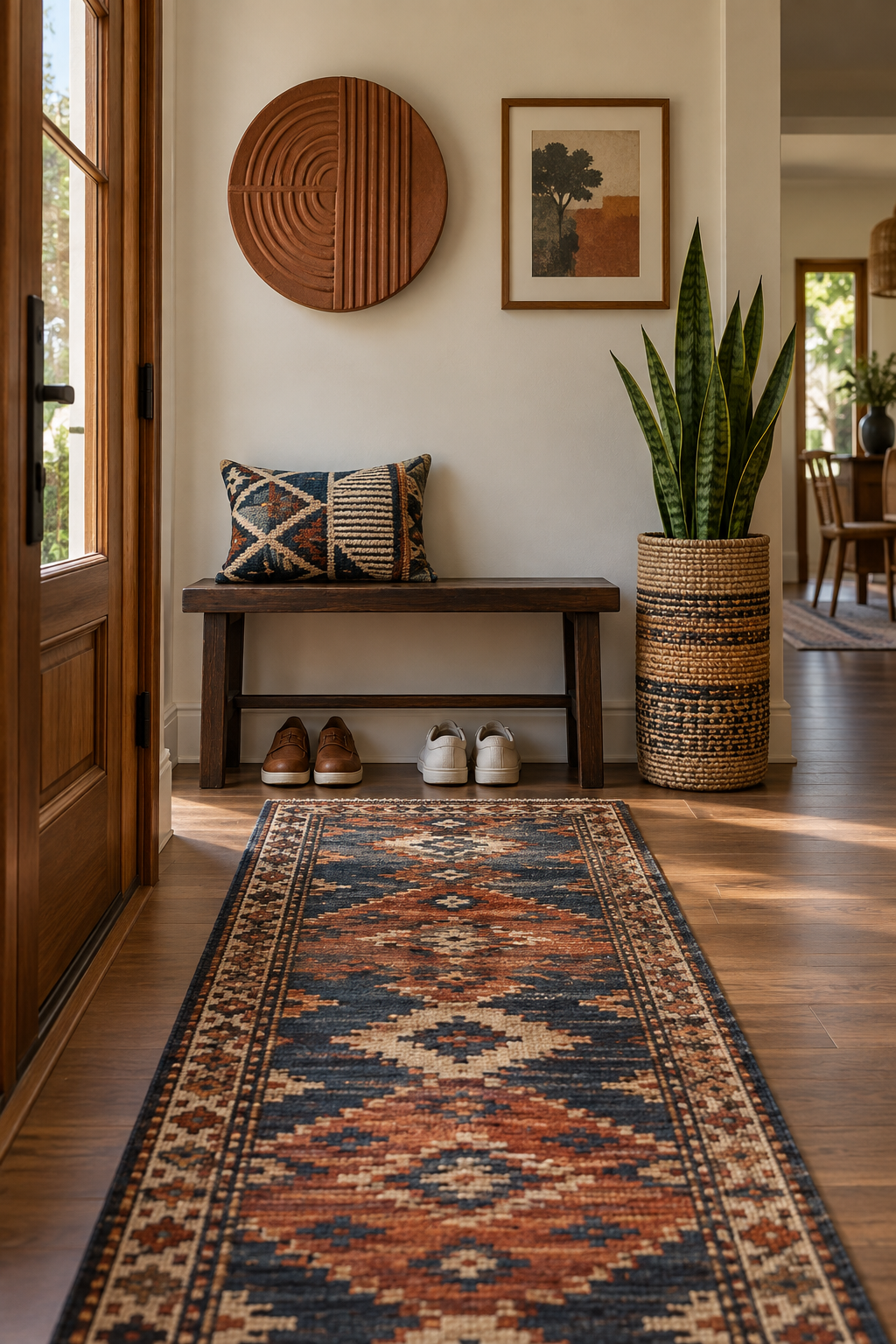
6. Layer an Afrobohemian Palette With Restraint
Afrobohemian style gains depth from contrast: grounded dark tones, sun-warmed color, natural fibers and bold pattern. In a small entry, select three to five recurring colors rather than introducing a new shade with every object. For example, charcoal, clay, ochre, cream and deep green can support a lively composition while remaining coherent.
Balance pattern with calm surfaces. If the runner is strongly geometric, keep the storage cabinet mostly solid and repeat only one of the rug colors in the art or cushion. The broader Afrobohemian home decor guide offers more ways to build a collected room, while Motif Berbere decor without overcrowding explains how to use graphic pattern with breathing room.
For a quieter foundation, borrow the tonal discipline used in warm neutral rooms, then add contrast through indigo, terracotta or black. If a livelier scheme suits the home, study bold color combinations and repeat each statement hue at least twice so it feels intentional rather than accidental.
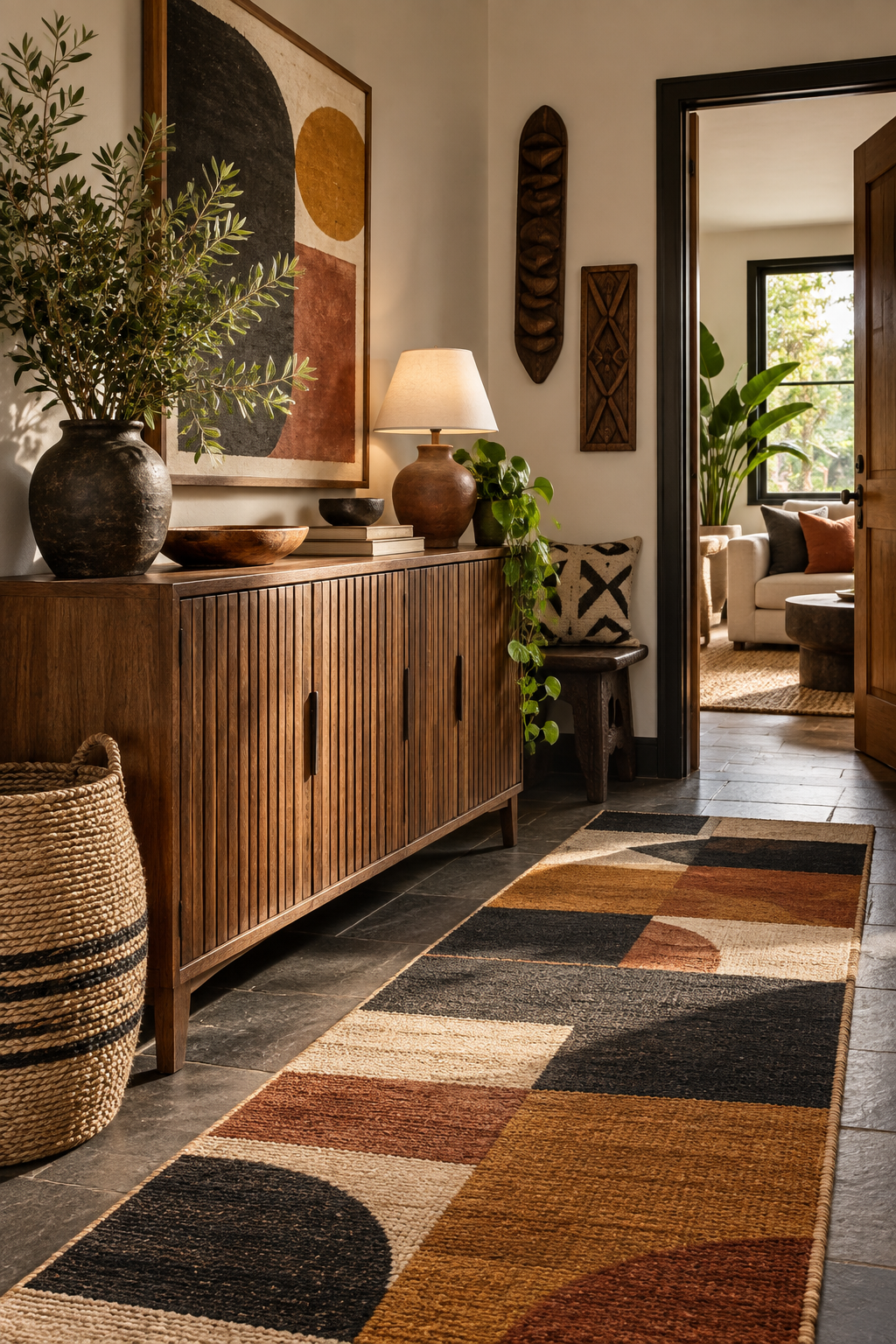
7. Use a Mirror, Focused Lighting and Greenery
A mirror can increase the sense of depth and return light into a narrow entrance. Position it where it reflects art, greenery or an open interior rather than a cluttered coat rack. A simple dark frame, hand-finished wood surround or gently organic shape can provide enough presence without competing with patterned textiles.
Layer the light instead of relying on a harsh ceiling fixture. A compact lamp on a secure console, a wall sconce or a warm directional pendant can create a welcoming focal point. Add one healthy plant suited to the available light, choosing an upright form for a tight corner or a trailing plant for a high shelf. One substantial plant is often more effective than many tiny pots.
Expressive does not have to mean expensive. The selective approach used in maximalist decor ideas on a budget works especially well here: choose a few high-impact pieces, vary their scale and allow empty wall or surface space to frame them.
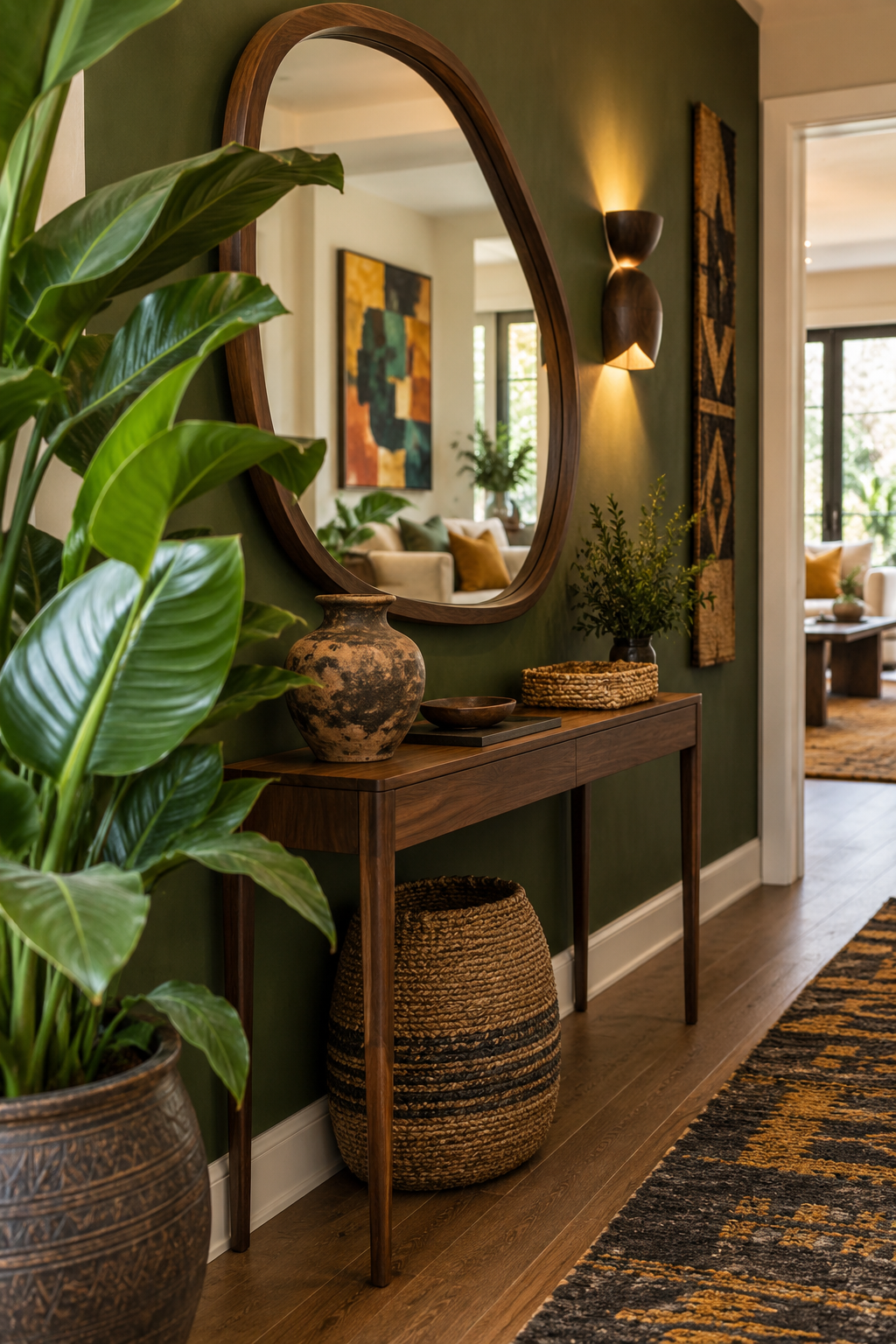
8. Edit the Display and Create a Five-Minute Reset
The final layer is not another object but a maintenance rhythm. Assign a capacity to each storage point: one tray for outgoing items, one basket for accessories and a fixed number of everyday shoes. When a container is full, remove or relocate something before adding more. This keeps the system honest and prevents attractive storage from becoming hidden overflow.
Use a five-minute evening or weekly reset to return keys, process mail, pair shoes and clear the bench. Rotate seasonal accessories instead of displaying everything at once. As the weather changes, adjust what remains closest to the door while preserving the same underlying zones. The entryway will still feel layered and personal, but it will also be ready to support the next day.
Final thoughts
A successful Afrobohemian entryway does not depend on filling a small space with decorative objects. It comes from pairing clear storage rules with expressive materials, controlled color and a few carefully scaled focal points. Protect the walkway, conceal visual noise and let handcrafted texture appear where it can be appreciated.
Build the room in stages and observe where belongings naturally land. Once hooks, shoes, keys and mail have practical homes, the richer layers—pattern, art, greenery and sculptural accents—can make the entrance feel welcoming without allowing clutter to take over.
Frequently asked questions
What colors work best in a small Afrobohemian entryway?
Choose three to five connected colors with clear contrast. Charcoal, cream, clay, ochre and deep green form a versatile palette. Indigo or aubergine can replace one accent, but repeating each strong color elsewhere in the composition will make the scheme feel deliberate.
How can I add storage without making a narrow entryway feel smaller?
Prioritize shallow closed storage, wall hooks and floating ledges. Keep the main walking route and door swing clear, choose furniture that sits close to the wall and avoid filling every vertical surface. A mirror can also return light and create a stronger sense of depth.
Can renters create this look without drilling into the walls?
Yes. Use a freestanding narrow bench, weighted floor mirror, over-door organizer, removable hooks approved for the wall finish and a washable runner. Always follow the hardware manufacturer’s surface and weight guidance, especially for bags or framed pieces.
How many patterns should a small entryway contain?
One dominant pattern and one or two quieter supporting patterns are usually enough. Change the scale of the motifs and connect them through shared colors. Surround graphic textiles with solid wood, plain plaster or uncluttered wall space so the patterns remain readable.
How do I stop the entryway from becoming cluttered again?
Give every recurring item a specific location and limit the capacity of trays, baskets, hooks and shoe storage. Process mail promptly, rotate seasonal gear and schedule a short reset. When a container is full, remove something rather than adding another container.